Showing posts with label economic. Show all posts

29 Jul 2014

Hi Pollution Monitoring In Cement Industry!.

Hi Pollution Monitoring In Cement Industry!.


The rising use of waste based fuels in the cement industry, both for economic and Environmental objectives, combined with the strengthening of air emission regulations around the world is pushing many operators to face a wider list of pollutants to monitor this, with associated costs. 
The design of appropriate solutions meeting local regulation is the key to maximize the cost benefit of the fuel while maintaining good relationships with local authorities and populations.

Besides the usually requested parameters, like SO2, NOx, CO, total particulate matter, and NH3, additional parameters can also be measured such as HCl, HF, Dioxins & Furans (PCDD/PCDF), Mercury (Hg) and VOC/TOC.
The monitoring of each gas pollutant, when required, can pose specific difficulties, but in general keeping the cost low means trying to operate a multi components analyzer able to measure all of them, except Dioxins & Furans and Mercury which requires very specific technologies and dedicated sampling devices.
Various manufacturers have developed a broad range of analyzers and sampling systems dedicated to meet cement operator needs according to their local regulation. 

Some of these solutions are described below:
The MIR 9000H developed by Environnement S.A (France) is a new generation of heated NDIR analyzer able to simultaneously measure  traditional components such as NOx, SO2, CO, CO2 and O2, in addition to H2O and pollutants like NH3 and HCl, representing a very cost effective, turnkey solution. 
 Click Logo Image To Visit Homepage For Further Information.

This analyzer was designed to be operated without any chiller, drying membrane, or catalytic oven, allowing the flues gas directly into the measurement cell without any kind of disturbance. 
The entire system being heated to 180°C (~360°F), no condensation can occur even in extremely wet conditions with up to 40% moisture. 
This analyzer’s robust design is particularly suited to demanding wet stack gas mixtures, including those with potentially high NH3, HCl and HF content. Indeed, this analyzer is completely immune to NH3, HCl and HF: both its integrity and its metrological performances being unaffected.

As a cost effective heated analyzer, the MIR 9000H is also an ideal solution for process control to monitor ammonia slips in SCR/SNCR processes
In these processes, either ammonia or urea can be used. It is important to stress out that in the case of urea, MIR 9000H takes into account the N2O which is created as a by product. MIR 9000H can also cope with formaldehyde, a compound which can be produced with some types of fuels and cause problems to NDIR measurements.
For low SO2, HCl or NOx concentrations, the SEC-MIR9000 system combining an exclusive membrane based drying technology (sampling) and state of the art NDIR multigas analyzer remains the perfect solution.
It allows for the measurement of a wide range of pollutants, including also CO, CO2, HF and TOC, as well as N2O and formaldehyde for interference corrections purposes.
The SEC-MIR9000 system, while being technically speaking an extractive system, also exists as an in-sit setup (MIR IS). 
Very low NOx concentrations can also be measured with a chemiluminescence CEMS bench, either as an option of an NDIR system, or as a standalone analyzer.

FTIR: Environnement S.A was the first company to introduce the FTIR technology for CEMS application and remains a leader. 
This technology allows the monitoring of a wide range of pollutants, including SO2, NOx, CO, CO2, NH3, HCl, HF and VOC/TOC, with low measurement ranges, making it the ideal solution for the strictest regulations.
Dioxin is an increasing source of suspicion by neighbour populations in regards to waste or alternative fuels combustion. 
The AMESA-D continuous sampler allows for a continuous coverage of dioxin emission and is already considered the standard for monitoring dioxins/furans around the world.
Beside the emissions of PCDD/PCDF there are other emissions of compounds which are not or not so easy to be monitored continuously. 
E.g. mercury can be monitored continuously, but for plants with low concentrations in the range of µg/m3 the accuracies of the existing mercury CEMs depend very strong on the experiences and maintenance efforts of the operators. 
Otherwise the results are not accurate enough. Additional the availability of such systems is restricted.
The continuous Hg Sorbent Trap Measurement System (STMS) AMESA-M represents a cost effective alternative to mercury analyzers, especially when the limit or detection is low and that complex and expensive technologies are necessary. 
The system is based on the adsorption trap method described in the performance specifications 12B of the MACT standard for the continuous monitoring of mercury emissions and is suitable for nearly every application.

The AMESA-M system requires very low maintenance and is adapted to the different flue gas conditions and requirements given by the operators: its availability under difficult flue gas conditions could be kept by values of almost 100 %.

29 Jun 2014

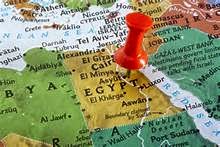
Hi Locally Established! Local Events, Our Local Domain Egypt!

Hi Locally Established! Local Events, Our Local Domain Egypt!

Click Image Here To Visit Hammam Industries & Co. Website.


Main Event; Egypt Food Tech Expo 2014!!.


The International Exhibition for Food Technology and Packaging "Food 
Tech 2014" will take place from August 8 - 10, 2014.
The food processing industry is one of the key economic sectors in Egypt, 

contributing employment, and value added and export activity.

The food processing industry is also characterized by its high potential.

 The domestic food-processing sector is growing and has attracted 

increasing investment in recent years.

Visitors of the event include:

- Buyers for large-scale food processing companies.

- Buyers for small and medium food processing companies.

- Buyers for catering chains.

- Restaurant and hotel managers.

- Travel catering buyers.

- Food industry - Producers of raw materials.

- Service suppliers.

- National and foreign trade press and media

For more information, please visit:


To contact the organizers, please visit:


Main Event; Egypt Shop Fair 2014!!.


The 3rd International Exhibition for Equipment shops, supermarkets,
 stores and shopping centers will take place from August 8 - 10, 2014.
Rapidly and successfully developing retail and wholesale business in egypt 

makes specialized exhibitions of commercial equipment are specially

 popular. 

The exhibition will include: equipment and furniture for shops, 

supermarkets, restaurants, cafes and bakeries, hotel equipment, shop 

equipment, storage equipment, refrigerators and freezers and much 

more.

The International Exhibition "egy shop" is the first business event in 

egypt, 

which reflects the real situation in the market and assists in developing the 
industry.

To contact the organizers, please visit:


Main Event; Cairo Energy 2014!!.


Cairo Energy Oil & Gas International Conference & Exhibition will be held 
between 6th and 9th September 2014.
Cairo Energy Oil & Gas International Conference & Exhibition, organized 

by 

Pyramids International Group, will be held between 6th and 9th 

September 2014 at Cairo International Convention Center.


Event will be a unique meeting platform in Egypt which is a major transit 

point for oil and LNG from the Persian Gulf to Europe. 

Egypt, on the other 

hand, is the largest non-OPEC oil producer in Africa and the second 

largest 

dry natural gas producer on the continent.


Event will serve the further development of the industry and bring 

together the most crucial actors of the sector. 


Cairo Energy will not only 

be highlighted through the deals and contracts to be concluded by key 

buyers and decision makers of the industry, but it will also turn out to be 

the preferred choice of the manufacturers to showcase their newest 

products due to the high reputation of the event in the Egypt energy 

industry. 


Therefore, the event will be a key component of the promotional 

campaigns of numerous companies in the sector.


This Event, through its Conference, will enable all professionals from the 

Energy Sector to share their expertise, exchange ideas and experiences, 

update their knowledge and skills and discuss the latest progress and 

challenges facing the Industry as well as, of course, networking and 

relational development.Cairo Energy Exhibition will also serve to 

alternative energy to bring together the newest and hottest products 

manufacturers related with solar and wind energy. 

Egypt has one of the most efficient winds of the world and Egypt is 

privileged to have 3000 hours of sunlight per year.

For more information, please visit:


Where Did We Find This Blog Post Information? Check Out 

Egypt Business Directory, Your Local Guide In Egypt To Local Business 

News, Events, Organizational Information & Much More, View & Visit 

Hammam Industries & Co. Egypt Company Profile Located & Published 

On 

Egypts Top Listing Directory;


Or The Logo Image Below;

 Click Logo Here To Visit Hammam Industries & Co. Company Profile!!.

You May Wish To Subscribe Directly To The Egypt Business Directory & 

Receive The Latest Information & Developments News & Updates!!.


 Click Image Logo Here To Visit Hammam Industries & Co. Homepage Egypt!!.

15 Feb 2013

Hi Challenges & Rewards for Wind Engineers.

(Hi) 'Challenges & Rewards for Engineers in Wind:


By Lawrence Willey, Robert Budny, and Sandeep Gupta – Clipper Windpower LLC

Notwithstanding the sluggish pace of the economic recovery and the cost of nearly everything seemingly on the rise, renewable energy production continues to be an important sector of the global economy. The adverse consequences of climate change, together with the shared global reality of governments, businesses, and individuals feeling a collective pain at the pump due to high oil prices, are spurring society to find ways to reduce fossil fuel consumption and develop alternative energy sources. While advances in traditional and alternative energy production are occurring, large utility scale wind energy is currently the most viable renewable solution available.Today, engineers looking to make an impact in the world need look no further than the challenges and rewards facing the wind energy sector.

There are many advantages that wind brings to the energy mix. For one, wind turbines do not produce combustion byproducts and can generate electricity for comparatively low costs, in many cases comparable to some of the lowest cost traditional methods such as natural gas fired combined cycle power plants. Some additional advantages for large utility scale wind energy include revitalization of rural communities, fewer government subsidies, free fuel, price stability, cost effective electricity production, and significant job creation.Wind energy projects create new short- and long-term jobs. Employment includes developers, surveyors, meteorologists, structural engineers, assembly workers, lawyers, bankers, and technicians to name just a few. Per unit of electricity generated, wind creates nearly 1/3 more jobs than a coal plant and nearly 2/3 more than a nuclear power plant.

Wind energy can diversify the economies of rural communities, adding to the tax base and providing new income. All energy systems are subsidized, and wind is no exception. However, wind receives considerably less than other forms of energy. The Government Accountability Office determined that fossil fuels received nearly five times as much in tax incentives as renewable energy did between fiscal years 2002-2007, with $13.7 billion going to fossil fuels compared to $2.8 billion for renewables.[1

Unlike other forms of electrical generation, wind generates electricity at the source of fuel.Wind does not need to be mined or transported, removing expensive elements from energy costs.The cost of wind-generated electricity has fallen from nearly 40¢ per kWh in the early 1980s to 2.5-6¢ per kWh today depending on wind speed and project size.

Modern land based utility scale wind turbines are in the 1.5-3.0 MW range.They consist of large structures designed to handle extremely high loads, and unusually high fatigue cycles.They must also operate over a wide range of environmental conditions, have a low maintenance requirement, and most importantly – they must be low cost. Comparison of the estimated cost of a helicopter and wind turbine blade highlights the difference in cost requirements; helicopter blades are about $1000 per pound compared to $5 to $20 for a wind turbine blade.

A model by Electric Power Research Institute,Technical Advisory Group (EPRI – TAG), is commonly used to calculate cost of energy (CoE) of utility scale wind turbines.

Where: FCR = Fixed charge rate, Cost Capital = Total capital cost of the project, and CostO&M = Operations and maintenance cost per unit of energy.

From this relationship, FCR, Capital Cost, and O&M must be as low as possible, and at the same time the AEP should be as high as possible. Using 9% cost of money and assuming installed 2.5MW turbine example levels of Capital Cost, O&M, and AEP of $1.43M/MW, $25/MWh, and 8300 MWh respectively, the resulting CoE is about $64/MWh. If this example turbine was in an area where retail electricity cost consumers $80-90/MWh, the wind turbine owner would stand to make a healthy profit, even without government subsidies.

Many opponents of wind energy try to point to the intermittency of wind and the need to provide backup power or storage. Fortunately, with a holistic systems level view of the grid, this argument doesn’t stand up. In fact, large and abrupt changes in demand for electricity can and do adversely affect the output of conventional electric generation sources - such as grid operators facing the sudden loss of a large power plant - whereas wind output changes are typically more gradual and predictable.This is easily understood by thinking of the continuous parade of storm fronts day to day, moving generally west to east in many regions, with wind plant after wind plant in the path of these storms taking their turn to spin up and generate electricity.

Designing and maintaining a wind turbine is a challenging task, requiring close interaction between engineers of many different disciplines.The fundamental challenge in designing a wind turbine is for it to operate reliably and safely for twenty years or more; produce as much power as possible, and with the lowest possible initial and life cycle costs.

Wind turbines are often referred to as three blades on a stick.“I can understand why engineers have that perception. The reason is usually a lack of understanding of complexities and challenges involved in wind turbine design” says Clipper’s Sandeep Gupta. He relates this perception to this own personal experience.“As an engineer with aerospace background, I was in the same boat once.When I joined the University of Maryland for my doctorate program, my advisor offered me a research project on wind turbine aerodynamics. My first reaction was disappointment. However, I decided to give it a shot and that was one of the best decisions I ever made. As I got to understand the complexities of wind turbine technology and the challenges involved, I fell more and more in love with the technology.”

If we begin considering a wind turbine from the ground up, we start with the turbine foundation.Wind turbines are exposed to massive over turning moments, requiring a well designed foundation, containing thousands of yards of concrete and hundreds of tons of steel.

The tower, which transmits the turbine loads to the foundation, must meet the extreme loads and fatigue life requirements of the turbine, as well as stability requirements.The tower comprises a large portion of the cost of the wind turbine due to the large amount of steel required for fabrication, and due to the high costs required to transport the tower to the site.These costs are driving innovation in wind turbine towers, which have evolved from lattice type construction in the early days of wind, to the tubular steel construction which is most common today. Examples of newer tower technologies include concrete pre-tensioned segments; lattice towers with architectural covers, which lower transportation costs; towers with vibration damping systems that increase the fatigue life of the tower and reduce materials costs; and self-erecting tower tech nologies to reduce construction costs.Towers are also growing taller to access higher speed wind, which will require additional innovation in order to meet the load carrying and life requirements while not increasing CoE.

As we continue to move up the turbine, we come to the bedplate, typically a ductile iron casting that supports the turbine drivetrain and rotor.The bedplate is also exposed to large extreme loads and to a challenging fatigue load environment, and often must be relatively stiff to ensure the correct alignment of drivetrain components.The bedplate supports the drivetrain, which typically consists of a gearbox and a generator.

The purpose of the gearbox is to increase the speed at which the generator turns in order to reduce the cost of the generator. It is here that we begin to see the collaboration required between the mechanical engineers who design the gearbox and the electrical engineers who design the generator, as the design of each component affects the other. The higher the gearbox ratio, the higher the cost of the gearbox (with lower the reliability due to increased part count) and lower the cost of the generator.

The challenge for the design team is to produce a drivetrain system that has the lowest overall costs and highest reliability, and to recognize the effect that each component has on the balance of the system.Wind turbine drivetrain reliability has been an issue in the past, and is spurring a large amount of innovation in drivetrain topologies. Some of the latest drivetrain technologies include direct drive generators, low speed generators with a simple gearbox (a compromise between current high speed technology and direct drive technology) and hydraulic speed increasers as an alternative to a gearbox.

From the drivetrain, we move to the rotor blades, the most visible part of the turbine, and perhaps the component requiring the most interaction between engineering disciplines.A rotor blade must be as efficient as possible, quiet, and relatively insensitive to fouling from insects and dust. It must have at least a 20 year fatigue life, withstand hurricane force winds and lightning strikes, and have sufficient stiffness to avoid striking the tower under any operating condition.

Meeting these requirements requires the participation of aerodynamicists, structural analysts, materials engineers, process engineers, and controls engineers, each of whose design decisions affect those of other members of the rotor, turbine, and Wind Power Plant (WPP) design teams.

A formal coursework in wind turbine engineering in the United States has been relatively scarce until recently. University of Massachusetts,Amherst has a long history of providing formal education in wind energy. In addition to this,Texas Tech University, University of Colorado at Boulder and University of California, Davis also offer focused programs for wind energy research.With the increase in funding for basic research in wind energy and the rapid growth of wind energy, the last few years have seen a substantial increase in the number of universities offering courses focused on wind energy, making it easier for engineers to meet the challenges and reap the rewards in wind.

The growth of large utility scale wind power is fast paced and generating unprecedented demand for engineers and technicians. For those heeding the call – The technical challenges and rewards are second to none.

References

1. “Federal Electricity Subsidies: Information on Research Funding, Tax Expenditures, and Other

Activities That Support Electricity Production,” GAO, October 26, 2007.


11 Oct 2012

Hi Featured Business Article of The Month!.

Hi Featured Business Article of The Month!.

Saudi Arabia: Wednesday, October 10 - 2012 at 10:44


In recent years, Saudi Arabia has been developing key economic sectors including services, industry and real estate, and in 2000 the kingdom's cabinet approved the Foreign Capital Investment Law. It stemmed from a recognition by King Abdullah that certain sectors require foreign expertise to grow and prosper, and was introduced to regulate outside investors keen to do business in Saudi Arabia.

This overview provides some general guidance on the laws and principal legal factors that must be considered when doing business in Saudi Arabia. Since the kingdom's laws can often be confusing, and even contradictory, it is recommended that foreign investors seek specific legal advice before entering into a business venture in the country.

The foreign investment licence;

Those who are keen to invest in Saudi Arabia must obtain a foreign capital investment licence from the Saudi Arabian General Investment Authority (Sagia).

All Saudi companies, or those registered within other GCC countries, are treated as GCC nationals if they are wholly owned by citizens or governments of GCC member states. GCC firms with foreign shareholders, foreign businesses, or any investor who is not a national of one of the GCC countries must obtain a foreign capital investment licence.

The Foreign Capital Investment Law allows the establishment of companies with 100 per cent foreign ownership within most economic sectors.
When an investment is licensed under the Investment Law, a business enjoys all the privileges and incentives offered to wholly Saudi-owned firms. These include: ownership of freehold property (if that property is necessary for the company to carry out its licensed activities); privileges granted by the anti-double-taxation treaties to which the kingdom is a party; legal protection against expropriation or confiscation of investments; and the right to repatriate profits.

Incorporating a local entity;

Saudi company regulations regulate the establishment and governance of corporate entities in the kingdom. The limited liability company (LLC), joint stock firm and branch of a foreign business are the most common forms of legal entities. Others include sole proprietorship, scientific offices and temporary commercial registration (TCR), which is granted to foreign entities that sign contract agreements with a government or semi-government department to execute a project. A TCR is limited to one contract and lasts until that contract's final date.

Limited liability companies (LLCs);

An LLC is the most common corporate vehicle for equity participation by foreign investors. It must have a minimum of two shareholders, and not more than 50. People and corporate entities may be shareholders. Generally, shareholders are liable for the debts of the company only to the extent of their respective interests in the firm's shares.

Transfer of shares between parties is effective on the date of notarising the articles of association amendment to reflect that transfer, and the liability of a selling shareholder ceases from that date. Sagia regulations and requirements are applied to new foreign shareholders who form a licensed LLC, and the procedures are the same for existing shareholders.

Joint stock companies;

A joint stock company must have a minimum of five shareholders, but there is no maximum.
Shareholders may be people or corporate entities. A minimum of SR2m ($533,000) of share capital must be used to establish a closed joint stock company, and the firm's foundation is subject to approval by the Ministry of Commerce & Industry.

Branches of foreign companies;

Branches of foreign firms in Saudi Arabia are subject to regulations, laws and rules applicable to their activities. As with LLCs and joint stock companies, foreign businesses that establish branches in Saudi Arabia must deposit capital in a local bank. The deposited capital will be blocked until the Ministry of Commerce & Industry issues a certificate of registration for the branch.

Contracting firms must have at least a third-class contractor's classification certificate and completion certificates for projects undertaken outside Saudi Arabia. They must be able to prove they are financially solid and require minimum capital of SR1m. If they are working on an industrial project, the capital required will depend on a feasibility study carried out by the investor. If the project's capital requirements are more than SR5m, Sagia allows the company to deposit only 25 per cent of the capital in the bank.

Laws;

Some of the legislation that companies operating under the Foreign Capital Regulation Law must adhere to include:

Anti-cover-up Law
The Anti-cover-up Law prohibits non-Saudis from conducting or investing in any business in the kingdom without a foreign capital investment licence issued by Sagia and prohibits any Saudi person from assisting in such activity.

Environmental Law
The Presidency for Meteorology and Environment (PME) is the entity responsible for regulating pollution control and related environmental matters. The PME (previously known as the Meteorology and Environmental Protection Administration, or Mepa) has issued environmental protection standards regarding ambient air quality, air pollution sources, receiving-water guidelines, direct discharge performance and discharge pre-treatment guidelines.

Saudi Arabia has also approved the General Environmental Regulation and the Environmental Assessment Regulation for the GCC. The General Environmental Regulation prohibits any act or failure to act that may result in adverse environmental effects and requires that precautionary and pre-emptive measures be implemented to ensure that such adverse effects do not occur as a result of the construction of any project. The Environmental Assessment Regulation applies to a long list of projects that may have an environmental impact and requires that an environmental assessment be conducted on projects that fall under its coverage.


Immigration;

Non-Saudi citizens (other than GCC nationals) must obtain visas to enter the kingdom and must obtain permits to reside there. Visas and permits are not granted on arrival and must be obtained in advance.

Companies are required to register their employees' contracts with the Ministry of Interior before a residency permit can be issued. Each firm is permitted to have a certain quota of residency visas. Employees with residency visas who earn above a threshold salary may sponsor family members. Residency visas are valid for up to one year. Employees cannot work for anyone other than their sponsor and sponsorship cannot be transferred until the employee has worked for his original sponsor for at least two years.


Real estate;

'Ownership of real property is evidenced by title deeds.'
There is a central registry under the Ministry of Justice and the Ministry of Municipalities and Rural Affairs where all real property rights are recorded. A long-awaited mortgage law was approved in July and should become effective in the near future.
A non-GCC investor in possession of a foreign investment licence from Sagia may own real property in the kingdom, provided the property is necessary for the investment project. This includes real estate used to house the project's employees.


Requirements for setting up a company;

Commercial activity in Saudi Arabia has been broken down into eight categories:

Industrial
Commercial
Agricultural
Contracting
Real estate
Specialised services
Non-specialised services
Consultancy

To operate in any of these activities, a firm must fulfil specific requirements before it is licensed by Sagia.


Industrial activity;

1 The company must inform the Saudi Arabian Standards Organisation and Sagia whether it will be using Saudi, American or European specifications for its products and methods of manufacturing. It must then ensure the specifications of the product it wishes to manufacture are met and make sure the techniques of production adhere to the kingdom's rules. If Saudi certification is not available, certification from the US or EU can be used.
2 The company's capital must be at least SR1m.
3 It must provide a schedule for completing each stage of its project.
4 The investor must produce paperwork from the Saudi Industrial Property Authority (Modon) to show it is leasing or buying industrial land for the purpose of its investment activity.
5 If the company's capital is more than SR5m, each partner must submit a bank certificate for 25 per cent of its share of the capital. If the capital is less than SR5m, a bank guarantee for the whole sum must be submitted to Sagia. This must be done through a bank licensed in Saudi Arabia after the firm shows its investment licence and submits the deposit certificate. Sagia's commercial registration department will not issue a licence until this has been done.


Commercial activity;

1 The company must submit to Sagia a commitment that up to 75 per cent of its management and technical employees will be Saudis.
2 A Saudi partner must own at least 25 per cent of the firm. Foreign partners may not own more than 75 per cent of the capital, but their share must exceed SR20m.
3 The business must submit a commitment to train more than 15 per cent of its Saudi employees each year to Sagia.
4 The company must submit a bank certificate showing each foreign investor has access to a percentage of SR20m proportionate to its shares in the firm. This must be ratified by the Saudi embassy in that investor's home country.


Agricultural activity;

1 The minimum investment must be SR25m.
2 A company's activities are subject to approval by the Ministry of Agriculture.
3 The firm must submit to Sagia a bank certificate indicating each foreign investor has access to at least 25 per cent of its shares in the company. This must be ratified by the Saudi embassy.
4 The business must submit to Sagia a schedule for completing each stage of the project.

5 A company must commit to deposit its capital in a bank licensed in Saudi Arabia after Sagia has issued an investment licence. It must submit the investment and deposit certificates to the commercial registration department of the Ministry of Commerce & Industry.
There is a branch of this department within Sagia.


Contracting activity;

1 The investor must submit three financial statements for its operations outside the kingdom, covering the three years before it has requested its licence. The statements must be prepared by a certified accounting firm and ratified by the tax office and Saudi embassy in the investor's home country. They will be used to demonstrate the investor's operations are financially sound.
2 The investor must submit to Sagia completion certificates for major projects it has undertaken in the same field in which it plans to invest.
3 The company must be classified in its home country in the same activity and must be classified as at least a third-class contractor or its equivalent. Its classifications must be ratified by the Saudi embassy in its home country.
4 The firm must submit to Sagia a bank guarantee proving each partner has access to at least SR250,000, and this must be ratified by the Saudi embassy. (Recently, Sagia stopped allowing individuals to invest in contracting, preferring investment to come from large companies with more experience.)
5 Consultancy work may only be carried out by an LLC.
6 The business must submit a schedule for completing each stage of the project to Sagia.
7 The company must commit to deposit its capital in a bank licensed in the kingdom after Sagia has issued an investment licence. It must submit the investment and deposit certificates to the commercial registration department of the Ministry of Commerce & Industry.


Real estate activity;

1 Foreign investors may only deal in properties worth more than SR30m.
2 The property must be developed and leased or sold within five years of the investor beginning its activity on the project.
3 The property must be outside the borders of Mecca and Medina.
4 The company must submit a bank certificate for the capital or the share of each partner. This must be ratified by the Saudi embassy in the firm's home country.
5 The company must submit a schedule for the completion of each stage of the project to Sagia.
6 Before it can invest in property, the business must submit a study from a local, approved engineering firm showing the value of the land and the aggregate cost of the scheme.
7 A company must commit to deposit its capital in a bank licensed in Saudi Arabia after Sagia has issued an investment licence. It must submit the investment and deposit certificates to the commercial registration department of the Ministry of Commerce & Industry.

Specialised services;

Under Sagia's classifications, specialised services include communications and tourism.
1 The firm must obtain permission from the government body that regulates the field in which it will operate. For example, the Communications and Information Technology Commission, or the Saudi Commission for Tourism and Antiquities.
2 The company must submit a schedule for the completion of each stage of the project to Sagia.
3 The business must submit to Sagia a commitment to invest its capital in a bank licensed in Saudi Arabia, once Sagia has issued its investment licence. If the capital is more than SR5m, the company does not have to deposit the whole amount but can deposit 25 per cent of it. It must submit the investment and deposit certificates to the commercial registration department of the Ministry of Commerce & Industry.


Non-specialised services;

1 The company must submit to Sagia a commitment that 10-50 per cent of workers in its facilities will be Saudis.
2 After Sagia has issued its investment licence, the firm must submit a schedule for the completion of each stage of its project.
3 The company must submit a bank certificate to Sagia proving each partner has access to SR250,000.
This must be ratified by the Saudi embassy in each investor's home country.
4 Non-specialised services may only be carried out by an LLC.
5 The company must submit three balance sheets ratified by the tax office and the Saudi embassy in the investor's country to Sagia.
6 The company must submit to the commercial registration department at the Ministry of Commerce & Industry an acknowledgement that it has deposited its capital in a bank licensed in Saudi Arabia and that its investment licence has been issued by Sagia. It will then be granted commercial registration.


Consultancy activity;

1 The applicant for the licence must have a bachelor's degree or a higher qualification in the field in which he is consulting. This must be ratified by the Saudi embassy in his home country.
2 He must submit to Sagia three recommendation certificates from consultancy facilities. These must be ratified by the Saudi embassy.
3 He must submit to Sagia experience certificates proving he has worked as a consultant in his specialism for at least five years.
4 A consultancy must submit to Sagia a commitment that 75 per cent of its employees will be Saudi.

The negative list;

A list of sectors in which foreign investment is not allowed can be found on the Supreme Economic Council's website, Click Here.


Sectors that are restricted or partially restricted include:

Oil exploration, drilling and production
Manufacturing of military equipment, devices and uniforms
Manufacturing of civilian explosives
Catering to military sectors
Security and detective services
Real estate investment in Mecca and Medina
Tourist orientation and guidance services related to Hajj and Umrah
Recruitment and employment services, including local recruitment offices
Real estate brokerage
Printing and publishing
Audiovisual and media services
Land transportation services, excluding intra-city passenger transport by trains
Some medical services
Fisheries
Blood banks, poison centres and quarantines

Key contact;
Ministry of Commerce & Industry
Website: www.mci.gov.sa
Tel: (+966) 1 401 2220/4708


Applicable laws; 'Regulations that a branch of a foreign company must adhere to include':

Anti-cover-up Law
Competition Law
Immigration Law
Labour and Labourer Act
Social Insurance Act
Zakat and taxes regulations
Sharia Appeals Act
Act of Criminal Procedures
Law Act
Regulation of commercial registration
Regulation of commercial fraud
Banking regulations
Regulations protecting intellectual property
Trademarks Act
Copyright Protection Act
Patents Act
Residence Act
Foreign Investment Act (and its executive regulations and supplementing resolutions)
Regulations governing foreign ownership of real estate
Act of Encouraging and Protection of National Industries


Key contact;
Presidency for Meteorology and Environment
Website: www.pme.gov.sa
Tel: (+966) 2 651 2312/9868

Key contact;
Ministry of Interior
Website: www.moi.gov.sa
Tel: (+966) 1 401 1944

Key contact;
Ministry of Justice
Website: www.moj.gov.sa
Tel: (+966) 1 405 7777/5399

Key contact;
Ministry of Municipalities & Rural Affairs
Website: www.momra.gov.sa (Arabic only)
Tel: (+966) 1 441 5434

Key contact;
Saudi Arabian Standards Organisation
Website: www.saso.org.sa
Tel: (+966) 2 675 1013

Key contact;
Ministry of Agriculture
Website: www.saso.org.sa
Tel: (+966) 1 401 6666

Key contact;
Communications and Information Technology Commission
Website: www.citc.gov.sa
Tel: (+966) 1 461 8000

Key contact;
Saudi Commission for Tourism and Antiquities
Website: www.scta.gov.sa
Tel: (+966) 1 880 8855

*About the writer;

Hazem Midani is director of Jumana House, a Riyadh-based specialist in company regulation, foreign investment and business formation: 'Click Here To Visit Jumana House Website'.

"The laws for setting up a business in Saudi Arabia can be complex."


Hi Pollution Engineering Buyers Guide.

Hi Pollution Engineering Buyers Guide.
"Directory for Air, Water, Waste & Remediation Markets."

Hi Free Engineering Magazines and Downloads

Hi Free Industrial & Manufacturing Magazines and Downloads.

Hi Graduate Opinion Poll.

Hi Graduate Opinion Poll.
Hi - "Engineering Field."

Hi Translate

Hi 3D SketchUp "The Easiest Way To Draw 3D"

Hi 3D SketchUp "The Easiest Way To Draw 3D"
Hi Drawing “ Dust collectors” & “Systems”.