Showing posts with label energy. Show all posts

9 Nov 2014

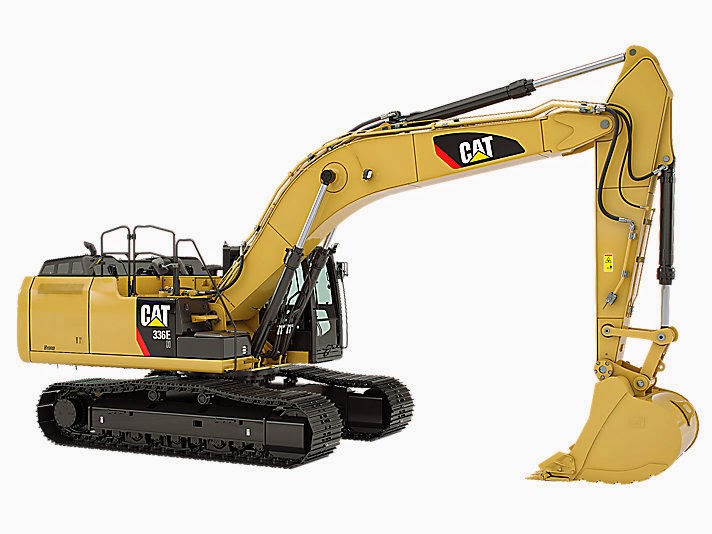
Hi Cat makes a big impact with its hybrid excavator!.

Hi Cat makes a big impact with its hybrid excavator!.

Hybrid technology for most people conjures up visions of fuel-efficient cars with conventional gasoline power supplemented by electrical power. For those of us involved in the fluid-power industry, however, hybrid usually means hydraulic, where accumulators — not batteries — store energy. That’s the case for Caterpillar’s 336E H hybrid excavator.
The hybrid option adds about 9% to the cost of a conventional 336E. That’s a substantial amount, but smart buyers will realize that they will quickly recover an even more substantial amount in fuel savings. In general, the payback period is about 2,000 hr of operation. Furthermore, the hydraulic hybrid drive carries a much lower price add-on than an electric hybrid drive would. That’s because the hydraulic version doesn’t carry the high price tag associated with electrical generators, motors cabling, and other components required for electric hybrids.
The 336E H captures and reuses energy in its swing drive, which holds high potential for saving energy. In a typical scenario, an excavator digs earth from the ground, raises it, then swings about 90° to dump the material. So by storing braking energy in accumulators at the end of each dig-and-dump operation, the swing drive can recycle most this energy for acceleration at the beginning of each cycle.
Using recycled hydraulic energy means less mechanical energy is needed from the engine. This lightens the load on the engine, which conserves fuel. Caterpillar officials estimate that the 336E H may consume 25% less fuel than its conventional counterpart, and 50% less fuel than a 336D Series.

Hybrid drive swings into action:


The heart of the Cat hybrid system is an axial-piston hydraulic pump. It features electronic variable-displacement control and is the same used in other Cat machines, just repurposed for the excavator. Electronic controls monitor engine speed and automatically adjust pump displacement so that pressure and flow closely match demand.
Controlling fluid directional control is Caterpillar’s Adaptive Control System (ACS) valve. The ACS valve provides independent control of multiple functions by managing inlet and outlet flow restrictions to and from each circuit of the machine to maximize performance.

No additional valves are necessary for

flow regeneration of the boom, stick or bucket cylinders.

Fuel savings mean quick ROI:


Some other “hybrid” excavators use an electric motor in the swing drive and store power in batteries. These systems carry a high initial cost and provide less fuel savings than Cat’s hydraulic hybrid. Plus, the 336E H also recycles energy from boom, stick, and bucket cylinders. These cylinders are sized with bores and strokes of 5.9 × 56.7 in., 6.7 × 68.4 in., and 5.9 × 45.3 in., respectively. Their combined volumes provide a substantial opportunity to store energy when cylinders retract and recycle it when cylinders extend.
One goal of this equipment program, of course, is fuel savings, which comes partially from recycling much of the swing and braking energy. However, substantial fuel conservation can also be attributed to the ACS valve, which allows a lower operating speed of the C9 engine — 1,800 rpm instead of 1,500. The lower speed also helps reduce the noise level of the machine but without sacrificing performance, thanks to the ACS valve. The swing and digging speeds were all kept the same as the 336D and E Series.

More hybrids on the horizon:


Caterpillar already plans to offer hydraulic hybrid versions of its 336F and 336D Series. They say larger excavators and wheel loaders can also benefit from the technology. However, incorporating the technology into smaller machines would not offer as fast of a return on investment. Therefore, no immediate plans exist for hydraulic hybrids in smaller machines.
According to Ken Gray, global product manager for Caterpillar’s large hydraulic excavator, ROI is what’s going to make the technology attractive to contractors. He said contractor focus groups consistently communicated to him that they are most interested in reliability and productivity, not their carbon footprint. They also made it clear that they didn’t want a seven-year payback period or a technology that was complicated and expensive to maintain.
Gray explained that this information is what drove the program. Caterpillar R&D had started developing electric hybrids but still kept hydraulic hybrid development moving on a parallel path. However, the performance, price, and familiarity of the hydraulic system won out over electric hybrid.
This result emphasizes the fact that even though hydraulics is considered a mature technology, it continues to evolve by incorporating the latest in electronics, design concepts, and, especially, new ways of reapplying established principles.


Hi EXPLORE MORE!!!...., 
 Hi Click Here For More Information.
Hi WATCH NOW!!!.


Hi Interview with Caterpillar's Product Manager!


!!!THANK YOU FOR VIEWING!!!

23 Oct 2014

HiWind economics more compelling than eve.

HiWind economics more compelling than eve.


Wind power, not shale gas, was the biggest single cause of the fall in US carbon emissions from coal use. The European Union also highlights why wind is becoming an increasingly smarter energy option over “cheaper” sources.
By Katherine Steiner-Dicks
The findings, based on figures by the US Energy Information Administration (EIA), contradict the established narrative that touted shale gas as the biggest single factor in bringing down US emissions in recent years, says Greenpeace.
The new analysis, which was published in part by Greenpeace and Energydesk, comes in the wake of a major international study recently published illustrating a global shale boom will not reduce emissions, and may lead to an increase in emissions of up to 11 per cent by 2050.
The US shale industry has been widely credited for reducing the country’s reliance on coal and slashing carbon pollution from the power sector. But research by Greenpeace energy and climate analyst Lauri Myllyvirta suggests that shale gas played a much smaller role than previously thought.
Between 2007 and 2013 the US saw the largest fall in coal usage ever experienced by any country, with renewables, energy efficiency and shale gas together picking up the slack. Switching away from coal led to lower emissions from the power sector, which has largely been attributed to fracking.


Surge in renewable:


The Energydesk analysis shows instead that most of the power vacuum left by coal (56%) was filled by a big surge in renewables and efficiency over the same period, with the rest being covered by gas-fired generation.
But a closer look shows that the reduction of CO2 emissions that the contribution of fracking is overshadowed by that of clean technologies and efficiency measures. Of the 16 per cent fall in US carbon emissions since 2007, only around a third (30%) came from switching from coal to gas, for the simple reason that natural gas still emits CO2.
By contrast, 40 per cent came from the switch from coal to renewables and the remaining 30 per cent from improved efficiency. Increased generation from wind power plants alone was responsible for 32 per cent of the drop - a slightly larger contribution than that made by gas, according to the reports.
The Greenpeace analysis only looks at emissions from burning the fuel to generate electricity and does not take account for the methane leakage from shale gas, which would further diminish shale gas’ contribution to emissions reduction, according to media reports.
A recent analysis by Bernstein research suggests US coal use will fall by a further 25 per cent by 2020, again partially driven by renewables growth.
The steady decrease of US emissions, however, has been reversed in these last 18 months following a price-driven increase in coal burn, and also a resurgence in crude oil production (up 31% in last two years). But with a significant number of coal plants due to retire in 2015, this return to rising emissions may turn out to be short-lived.

Fracking v. clean energy:


Commenting on the findings, Greenpeace energy analyst Lauri Myllyvirta said: “The supposed climate benefits of fracking have been a big selling point for the shale lobby, but this myth has now been cut down to size by compelling new evidence.
“Our analysis shows that it was the clean tech boom, not the fracking rush, that slashed the bulk of carbon emissions from the US power sector. And this even before considering the impact of fugitive methane emissions, one the most dangerous greenhouse gases on the planet.
“Ahead of a crunch year for global negotiations on a new climate deal, all the evidence points to clean technologies and smarter energy use as the most effective solutions to tackle climate change. Our political leaders will do well to remember this.” 
Wind: comparatively a lower cost energy:


Separate analysis reports are also highlighting how wind energy is one of the lowest cost options for reducing carbon emissions, but some have attempted to take another analysis out of context to argue that this is not the case, said a news brief by the American Wind Energy Association (AWEA).
The recent positive news about wind energy includes a from Wall Street investment firm Lazard, which confirms that wind energy’s recent cost declines have made it the lowest cost option for reducing emissions.
In fact, said the AWEA report, Lazard’s results indicate that wind’s cost is lower than all other new generation options, making wind a win-win for consumers and the environment by giving wind a negative cost of reducing emissions. Additional positive news comes from a draft EU report (source: The Guardian) that shows that wind is the lowest cost energy source once the public health and environmental costs of other energy sources are accounted for.
A recent report from the U.S. Department of Energy confirms that wind’s costs, as reflected in signed utility wind purchase contracts, have fallen by more than half over the last five years. Moreover, the report finds that over the life of a project, wind is by far the lowest cost option once expected increases in the price of fossil fuels are taken into account.
“Undeterred by these findings, some have misrepresented a rough estimate prepared by the Midwest grid operator (MISO) of the potential costs of complying with EPA’s pending Clean Power Plan to limit emissions of carbon dioxide from existing power plants,” said AWEA.
“Some anti-wind groups have taken the results out of context, ignoring important caveats in the draft in an effort to attack wind energy. MISO has acknowledged the limitations of its initial analysis and has stopped presenting those results because others have taken the numbers out of context, but that has not stopped some anti-wind groups from continuing to misrepresent the results.”
As a result, AWEA has expressed that it is “compelled to set the record straight” by correcting the cost estimate to account for a number of critical limitations in the estimation method, including several that MISO has acknowledged have a significant impact on the estimate.
“These corrections bring wind’s calculated cost of emissions reductions down by a factor of 5 from the initial estimate. MISO has not yet released the full details of its methodology, so there would likely be additional corrections to the estimate if those details were known,” said AWEA.
The fact that utilities in MISO are signing wind purchase contracts at costs below the cost of competing generation proves that wind actually has a very low or even negative cost of reducing emissions, the AWEA has expressed.

Price stability:


Moreover, expected increases and volatility in the price of competing fuels make it even clearer that wind energy is the lowest cost generation option for reducing emissions in the long term, as shown in the chart below from DOE’s report.
President and CEO of Xcel Energy’s Northern States Power David Sparby is seeing the cost competitiveness of wind compared to other energy sources.
When he announced 600 MW of new wind purchase contracts by explaining that “Wind prices are extremely competitive right now, offering lower costs than other possible resources, like natural gas plants. These projects offer a great hedge against rising and often volatile fuel prices.”
According to MidAmerican Energy, the investor-owned utility controlled by Warren Buffett, its plans for a 1,050 MW wind farm in Iowa has its customer benefits: “The expansion is planned to be built at no net cost to the company’s customers and will help stabilize electric rates over the long term by providing a rate reduction totalling $10m per year by 2017, commencing with a $3.3m reduction in 2015.”

Europe wind sector sees steady investor 
appetite:


The total cost of energy production, which factors in externalities such as air quality, climate change and human toxicity among others, shows that coal is more expensive than the highest retail electricity price in the EU. A recent EU report puts the figure of external costs of the EU's energy mix in 2012 at between EUR150bn and EUR310bn.
Justin Wilkes, deputy chief executive officer of the European Wind Energy Association has said that renewables are regularly denigrated for being too expensive and a drain on the taxpayer. “Not only does the Commission's report show the alarming cost of coal but it also presents onshore wind as both cheaper and more environmentally-friendly," said Wilkes.
Onshore and offshore wind technologies also have room for significant cost reduction. Coal on the other hand is a fully mature technology and is unlikely to reduce costs any further.
Wilkes added: "We are heavily subsidising the dirtiest form of electricity generation while proponents use coal’s supposed affordability as a justification for its continued use. The irony is that coal is the most expensive form of energy in the European Union. This report shows that we should use the 2030 climate and energy package as a foundation for increasing the use of wind energy in Europe to improve our competitiveness, security and environment."

Investors agree:


Glennmont Partners, one of Europe’s largest fund managers focusing exclusively on investment in clean energy infrastructure, has signed an acquisition agreement with Sorgenia to build two wind farms in one of the strongest wind resource locations in France.
The acquisition comprises of two wind farm sites of 16 MW and 6 MW located in the Haute Normandie and Nord Pas de Calais regions in France respectively. The sites are located in one of the strongest wind resource areas of the country.
The two projects are ready to be built, having obtained all building permits and secured all land leases for 40 years. Power Purchase Agreements with EDF have been signed for both projects, which will benefit from the French Feed-In Tariff for 15 years.
“Long term, non-recourse project financing to fund the construction and operations of the wind farms has also been signed with leading lenders,” said the clean energy investor.
Currently the fund is managing in excess of 115MW of onshore wind farms in France, Ireland and the UK.
Francesco Cacciabue, Partner and Chief Financial Officer of Glennmont, said: “The 22 MW portfolio of new projects is a highly attractive investment opportunity. This investment complements our existing portfolio of wind and solar in France and offers investors access to substantial and visible returns, in line with our investment philosophy.”
“This is the first deal we have announced since closing our fully subscribed second fund last month. We have a strong pipeline of opportunities and we will continue to build on our momentum with other new investments in the coming months,” he added.

Partnering to expand:


Partnering in the renewable energy industry is also taking place in Europe. For example, Juwi, a renewable energy project developer based in Wörrstadt, Germany has a new partner: Mannheim-based MVV , which has agreed to acquire a 50.1 percent majority shareholding interest in juwi AG via a capital increase.
The transaction is expected to close no later than December 31, 2014. The two companies agreed to keep the financial and organizational details of the transaction confidential.
For juwi, the new strategic partnership is an important milestone that will strengthen and enhance its core business of project development, construction and operations & maintenance.
Listed energy player MVV Energie AG, which has annual revenues in the region of EUR4bn plans to further expand its commitment in the renewable energy sector through this new investment.
For Fred Jung and Matthias Willenbacher, the co-founders of juwi, the transaction represents a major building block for sustainable growth in the juwi Group: “We are delighted to be teaming up with Mannheim-based MVV Energie AG, which is already extremely active in the field of renewable energies and is now interested in the sustainable and strategic expansion of this commitment together with us.”
For MVV Energie AG, the partnership with juwi represents the systematic evolution of its strategic orientation: “The ongoing transformation of energy supply structures in Germany centers on an efficient and environmentally-friendly combination of renewable and conventional energies as pillars in the energy system of the future”, said Dr. Georg Müller, Chief Executive of MVV.
Stephan Hansen, the juwi Executive Board member responsible for international business said that outside of Europe demand for wind energy remains strong: “In a global context there is enormous potential for the efficient use of renewable energy, particularly wind and solar energy. In light of our outstanding accomplishments as a project development and EPC partner on almost every continent we want to harness these opportunities and continuously expand our international business.”
Apart from the new partner, the stable and profitable core business in Germany is helping the juwi Group with realignment. By the end of September, juwi had already realised over twenty wind projects this year throughout Germany with a total capacity of approximately 200 megawatt.


The company has also reported that several other projects with a total capacity of nearly 100 megawatt are currently at the construction stage leading to the conclusion that wind power is still in demand and showing that its cost effectiveness is increasingly matching its equally attractive low carbon status.

4 Aug 2014

Hi Understanding the basics of amorphous-iron motors!.

Hi Understanding the basics of amorphous-iron motors!.

Understanding the basics of amorphous-iron motors;

' Motors made with amorphous iron have a niche in jobs calling for high-frequency operation and energy efficiency.


Most engineers think amorphous iron is an exotic material that is hard to come by. But the interest level in this metal is rising because its magnetic properties can promote energy efficiency in electrical machinery and power distribution equipment. So it is timely to review the properties of amorphous iron that make it useful as a component in electrical equipment.
Despite what many engineers think, amorphous iron is actually made in large quantities. Two firms now supply the entire world’s amorphous iron: Metglas in Conway, S.C., and Tokyo (a division of Hitachi Metals), and Advanced Technology & Materials Co. Ltd.(AT&M) in China. About 100,000 tons of amorphous iron is produced annually, with Hitachi Metals supplying the vast majority.
Typical amorphous iron is an alloy of iron with boron and silicon. Amorphous iron comes from these suppliers in the form of a thin (25-microns thick) ribbon or foil. This form factor arises directly from the process used to manufacture the iron:  Molten iron drips onto a wheel comprised of pure molybdenum. The molybdenum wheel is kept at a controlled temperature so iron hitting the wheel quenches quickly. The molten iron temperature drops at a rate of about 1 million°C/sec. This extra-fast quench freezes the iron molecules before they have a chance to form crystals, resulting in an amorphous structure that is much less orderly than that of crystalline iron.
 Click Image Here To Download .PDF Article.

Environmental Value Creation; Hitachi Metals;

Download this article in .PDF format click the following link here.
This file type includes high resolution graphics and schematics when applicable.
The amorphous iron harvested from the molybdenum wheel is necessarily thin. At thickness's exceeding about 25 microns, the temperature doesn't drop as quickly for the internal iron molecules. These internal molecules would have time to form crystals so the resulting metal would lose its uniform amorphous quality.
The disorderly structure of the amorphous iron lets it respond to changes in magnetic fields more readily than is the case for ordinary crystalline iron. The magnetic field change also causes eddy currents in the iron that are an additional source of loss, and the super thin nature of the amorphous iron limits these as well. Thus amorphous iron exhibits much less power loss, typically measured in units of Watts-per-pound or Watts-per-kilogram, for a given magnetic field strength than does crystalline iron.

29 Jun 2014

Hi Locally Established! Local Events, Our Local Domain Egypt!

Hi Locally Established! Local Events, Our Local Domain Egypt!

Click Image Here To Visit Hammam Industries & Co. Website.


Main Event; Egypt Food Tech Expo 2014!!.


The International Exhibition for Food Technology and Packaging "Food 
Tech 2014" will take place from August 8 - 10, 2014.
The food processing industry is one of the key economic sectors in Egypt, 

contributing employment, and value added and export activity.

The food processing industry is also characterized by its high potential.

 The domestic food-processing sector is growing and has attracted 

increasing investment in recent years.

Visitors of the event include:

- Buyers for large-scale food processing companies.

- Buyers for small and medium food processing companies.

- Buyers for catering chains.

- Restaurant and hotel managers.

- Travel catering buyers.

- Food industry - Producers of raw materials.

- Service suppliers.

- National and foreign trade press and media

For more information, please visit:


To contact the organizers, please visit:


Main Event; Egypt Shop Fair 2014!!.


The 3rd International Exhibition for Equipment shops, supermarkets,
 stores and shopping centers will take place from August 8 - 10, 2014.
Rapidly and successfully developing retail and wholesale business in egypt 

makes specialized exhibitions of commercial equipment are specially

 popular. 

The exhibition will include: equipment and furniture for shops, 

supermarkets, restaurants, cafes and bakeries, hotel equipment, shop 

equipment, storage equipment, refrigerators and freezers and much 

more.

The International Exhibition "egy shop" is the first business event in 

egypt, 

which reflects the real situation in the market and assists in developing the 
industry.

To contact the organizers, please visit:


Main Event; Cairo Energy 2014!!.


Cairo Energy Oil & Gas International Conference & Exhibition will be held 
between 6th and 9th September 2014.
Cairo Energy Oil & Gas International Conference & Exhibition, organized 

by 

Pyramids International Group, will be held between 6th and 9th 

September 2014 at Cairo International Convention Center.


Event will be a unique meeting platform in Egypt which is a major transit 

point for oil and LNG from the Persian Gulf to Europe. 

Egypt, on the other 

hand, is the largest non-OPEC oil producer in Africa and the second 

largest 

dry natural gas producer on the continent.


Event will serve the further development of the industry and bring 

together the most crucial actors of the sector. 


Cairo Energy will not only 

be highlighted through the deals and contracts to be concluded by key 

buyers and decision makers of the industry, but it will also turn out to be 

the preferred choice of the manufacturers to showcase their newest 

products due to the high reputation of the event in the Egypt energy 

industry. 


Therefore, the event will be a key component of the promotional 

campaigns of numerous companies in the sector.


This Event, through its Conference, will enable all professionals from the 

Energy Sector to share their expertise, exchange ideas and experiences, 

update their knowledge and skills and discuss the latest progress and 

challenges facing the Industry as well as, of course, networking and 

relational development.Cairo Energy Exhibition will also serve to 

alternative energy to bring together the newest and hottest products 

manufacturers related with solar and wind energy. 

Egypt has one of the most efficient winds of the world and Egypt is 

privileged to have 3000 hours of sunlight per year.

For more information, please visit:


Where Did We Find This Blog Post Information? Check Out 

Egypt Business Directory, Your Local Guide In Egypt To Local Business 

News, Events, Organizational Information & Much More, View & Visit 

Hammam Industries & Co. Egypt Company Profile Located & Published 

On 

Egypts Top Listing Directory;


Or The Logo Image Below;

 Click Logo Here To Visit Hammam Industries & Co. Company Profile!!.

You May Wish To Subscribe Directly To The Egypt Business Directory & 

Receive The Latest Information & Developments News & Updates!!.


 Click Image Logo Here To Visit Hammam Industries & Co. Homepage Egypt!!.

27 Jun 2014

Hi #1 Descaling Vessels For Effective Heat Transfer!!!.

Hi #1 Descaling Vessels For Effective Heat Transfer!!!.

It’s been a few years since we addressed this topic head-on, which is why we feel it’s necessary to revisit the importance of descaling in ships.
Ships contain a number of heat exchangers, serving many of the same purposes as HVAC system, refrigeration systems and fresh water systems, to name a few.
When water scale develops on a heat transfer surface, heat transfer is greatly affected, reducing equipment efficiency and increasing energy consumption, which increases operating costs.
All too often, the scale buildup is ignored in favor of reducing operational downtime and saving money, resulting in efforts to fix the problem at the last minute or only when mechanical failure occurs.
In 2011, when we last talked about the importance of descaling in ship maintenance, we explained that heat exchanger cleaning is accomplished either mechanically or through the use of chemicals. 
The downside to mechanical cleaning is that the equipment must be dismantled and it requires a good amount of downtime, but with chemical descalers you can clean the equipment in place, reducing the workload and downtime. 
Your operation will save valuable maintenance dollars.
An effective descaling chemical product should offer the following:
  • Low corrosion rates. It should remove scale, but have low corrosion rates and not harm the system’s seals or gaskets.

  • Easily rinses out. It should only require a quick flush with water to get the product out, and it should leave no residue.

  • Cleans more than just scale. A descaler should also remove sediment, oil and the other materials that are often mixed in with scale.

  • Simple to use and quick acting. Ship operators need to minimize downtown, requiring an effective descaler to be a quick acting product that cleans scale fast.

Hi Pollution Engineering Buyers Guide.

Hi Pollution Engineering Buyers Guide.
"Directory for Air, Water, Waste & Remediation Markets."

Hi Free Engineering Magazines and Downloads

Hi Free Industrial & Manufacturing Magazines and Downloads.

Hi Graduate Opinion Poll.

Hi Graduate Opinion Poll.
Hi - "Engineering Field."

Hi Translate

Hi 3D SketchUp "The Easiest Way To Draw 3D"

Hi 3D SketchUp "The Easiest Way To Draw 3D"
Hi Drawing “ Dust collectors” & “Systems”.