Showing posts with label investment. Show all posts

26 Nov 2014

Hi Technical article: how to maximise return on machine investment.

Hi Technical article: how to maximise return on machine investment.

 Hi Visit Website For Further Information.

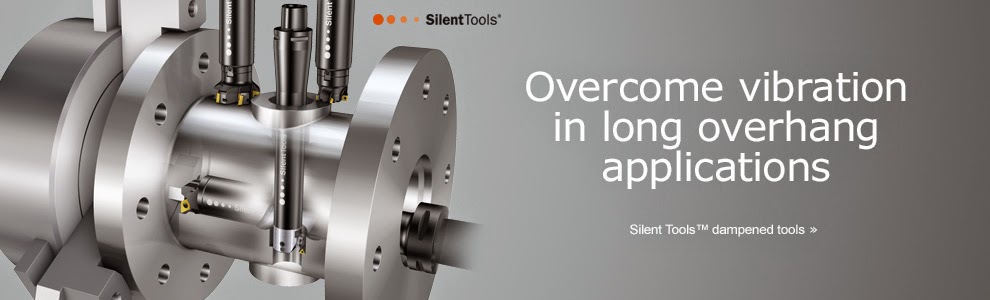
‘How to maximise return on machine investment’
Despite the significant investment that a new machine represents, the fact that around 70 per cent of machines are purchased un-tooled means that many manufacturers are still missing opportunities to reduce payback times and improve the return on investment (ROI) from their capital outlay. According to Sandvik Coromant, getting machine investment right from the start is the key to reducing payback times.


11 Nov 2014

Hi 5 steps to help align process improvement with strategy!.

Hi 5 steps to help align process improvement with strategy!.


The PEX Network flagship report explores 5 practical steps to help better align process improvement with strategy, as well as other critical issues facing process professionals.

PEX Network surveyed over 400 process professionals to find their top priorities for the year ahead. 

These findings were used to create the PEX Network annual report which highlights trends in investment, what challenges are ahead for process professionals and what are the top priorities for 2015.


Key Findings include:
  • Linking process improvement with top level business strategy ranks as the number one priority for the second year running
  • Nearly 50% of companies have identified process excellence as one of their top priorities in the year ahead
  • Investment in all categories of technology is up year on year, with “Big Data” and Analytics emerging as the top investment area for the year ahead
  • Many names exist for process excellence approaches and methodologies and this “brand confusion” may contribute to a lack of general awareness of process improvement as a core capability within companies
The research and interviews conducted for the report provides advice, facts and recommendations that will help companies create a blueprint for success.

 Hi Click Here For Instant Whitepaper Download.

19 Apr 2014

Hi Monthly China Investment Report!.

Hi Monthly China Investment Report!.


In this month's report:

A. New economic and social polices - President Xi Jinping's plans for reform.


B. Online retail shift in China - The rise of domestic consumption.


C. Luxury goods fall- Expected decline due to â??frugal livingâ??.


D. Automobile market strengthens - Early 2014 car boom for top companies.


E. UK's continual partnership with China -Investment surges for HS2 and nuclear power.


Click The Following Link Here To Download The Monthly Investment Report Or View & Download Below;


9 Apr 2014

Hi Industry Challenge.! Mining Discussions, Events, Webinars, Whitepapers & Much More!

Hi Industry Challenge.!
Mining Discussions, Events, Webinars, Whitepapers & Much More!


This Industry Challenge Shifts Focus On The Mining Sector & Introduces Utilising Data Analytics in Mining as the scope on mining ventilation is broadened to cover other aspects in the mining sector.

Hi Discussion Focus On; Utilising Data Analytics in Mining;


On Day One of Mining IQ’s Mine Automation and Communication conference taking place in Brisbane, Australia in April 2014, an interactive discussion was organised around the highly relevant topic of data
Inevitably with the growth in automated projects and operations, the volume and variety of data being collected by mining companies has significantly increased. However, with this comes the inevitable increase of challenges surrounding data collection, analysis and utilisation at a strategic level.
The attendees therefore were tasked with debating the following:
It’s all in the Data – Collecting Usable Data for Smarter Business Decisions
Data can often become redundant if it doesn’t reflect the most critical components and systems of your operation.
Furthermore, if information isn't captured at the right time, or in the right format, its value to the business is virtually diminished.
•             How you can ensure that the data you’re collecting is usable? What quality control measures should you have in place?
•             Quantity vs. Quality – which should be prioritised in automated operations?
•             Who is responsible in the organisation, or automation project, for data collection and analysis? The project manager, data scientist, engineer, or someone else?

In response to the first question, most were agreed that agreeing upon what you're trying to achieve and working back from there was imperative. 
You can then ascertain if the data you have is enabling you to make the correct decisions and achieve the results you set out for.
Heavily connected into deciding what you're trying to achieve, is who can get benefit from it? An important tip on this front was that you might need to take a more holistic view beyond just your own departmental needs to the wider organisation’s needs, even if it does end up with one other specific department, such as engineering.
The majority of the ensuing discussion focused around the second question and the quantity vs. quality challenge. The room was divided over how to take on this challenge, but formed into three quite distinct groups:
1. You shouldn't prioritise; you should focus equally on quality and quantity, and ensure you have a method in place to address both. 
Quantity is easier to manage in this relationship though, so long as you have the correct data collection and analytics systems in place that are appropriate for your individual business’ needs.
For managing quality, you should start with a clear requirement in mind that can drive the project forward. 
On this front you need to make sure the content of the data is appropriate for your site or project. 
This is relatively easy when looking at one particular function, such as production control, or drill and blast, but can become more demanding when you move towards applying it on a commercial or strategic level.
A particular mention was made here about the different challenges facing brownfield vs. greenfield sites
With greenfield sites it is easier to set a strategy and parameters from the get go, whereas this is inherently harder in a brownfield operation
This is particularly true in relation to suppliers, who will be used to working in a certain way with your operation.
2. Quality should come first – without quality, there is no point in gathering vast amounts of data. 
To improve quality, ensure you’re monitoring the way data is recorded
Once you are satisfied with the results of your smaller sample, you can start to increase the volume of data collection and analysis.
3. The final grouping felt that you should find quantity drives the quality.
Particular projects will finds that larger volumes of data can be far more useful than a small amount of highly accurate data.
Often to diagnose faults in equipment, or processes, you need a high frequency of data to be able to do this swiftly.
As you ramp up your data management strategy, and bring your equipment manufacturers and suppliers into the equation, you have to figure out how you can improve the quality of your data management, from the perspective of during collection, but also in terms of the analysis done on it. 
However, until you’re reaching large quantities of data on any operation, there’s not too much point in worrying about the quality. It’s only once you reach larger quantities that you have the potential of using it to improve production, or drive efficiencies in any real capacity.
Importantly when discussing quantity – bear in mind the more you start collecting, the more storage and backup requirements you will require – more is not always best!
When it came to the third question, this was decidedly difficult to get a definitive response from the room! The general consensus was that it depended upon the maturity of the operation, as there can be many stakeholders, champions, and project owners, and can be based both on site and in the office.

Hi Attend Focus Highlight; By Webinar Event 

Registration & Information:

*Register Your Participation in the Webinar Hosted by Mining IQ Held On Monday May 5, 2014 Highlighting Topic Of Big Data Analytics in Mining - Driving Results in your Business;

 Click Image To Register For Webminar.

Click Here Or Image Above To Register For Webinar Event On May 5th 2014 Hosted By IQ Mining.

This online, free event will address the following shared industry challenges:
  • Where to begin? How do you kick off your big data strategy and what’s really important to drive it.
  • How you can facilitate faster and more responsive business decisions based on business analytics and predictive analytics.
  • How to overcome stumbling blocks such as legacy systems, IP and privacy aspects as well as storage and security challenges.
  • Understanding how to best define rules around how data gets procured, stored, maintained and used to achieve the best business outcomes.

 Click Image To Visit IQ Mining Homepage.

View The Latest Mining Content, Event Details, Videos, Whitepapers & Alternative Webinars & Much More Mining Related Content, Visit Mining IQ By Clicking The Image Above Or The Link Available By Clicking Here.

Hi Added Focus Event; Mining and Quarrying Oman 2014

Visit the event official homepage For Further Event Details by clicking the link here.

Oman’s 700 km long and 150km wide mountains contain the best exposed ophiolite suite of rocks, which are favorable for copper, gold, silver, chromite, lead, nickel, manganese and zinc. 
Significant growth is expected over the next five years to help diversify the Sultanate's economy and create jobs for Omani nationals.
High set-up and operational costs mean Producers seek technologies, equipment and methods to increase production capacity, reduce downtime and optimise material flow to achieve higher profits. Drill and blast technologies can reduce processing costs and requirements whilst extending the lifecycle of the site. 
In addition, effective equipment selection and management can eliminate downtime and achieve higher material flow.
The recent requirement to add value to raw materials prior to export, has led to Producers seeking investment and partnerships to develop beneficiation plants and is likely to result in the development of a downstream industry.

3 reasons to invest in Oman's mining and quarrying industries:

  • 1A. Expansion of existing mine and quarry sites to increase production capacity, output and profits.
  • 2B. Development of processing facilities to add value to raw materials and support Oman's downstream industries for job creation.
  • 3C. Eight large non-metallic mineral reserves were located in 2012/13 which are demanded by every industry - particularly with the limestone and gabbro required for the Dubai Expo 2020 and the Qatar 2022 Fifa World Cup

  • Download  Mining and Quarrying Oman 2014 Brochure by clicking the link here or view it below;
  • *With such a high demand, prices for primary materials are expected to increase considerably.


What delegates say about Mining and Quarrying Oman:

"It was a very well organised event. The efforts are much appreciated and it was a great event for meeting similar industries and operators from the mining industry, where ideas and skills are exchangeable."

Director – Technical Services, Saudi Arabian Mining Company, Maaden.

Hi Continuum Topic Whitepaper; Aurizon presentation: Integrating Disparate SCADA Systems and How Virtualisation Can Help;


At IQPC's SCADA Australia conference in October 2013, Kanwar Cheema, Design Manager - Control Systems from Aurizon joined us to share with us Aurizon's experience of integrating disparate SCADA systems and how virtualisation can be instrumental in driving that successfully. Kanwar's presentation covered:


• Hurdles in integrating disparate SCADA systems.

• Benefits that can be achieved in efficiency and safety.

• Is virtualisation a solution that can contribute to integration?

• Could there be a “template system” that can be created?


Aurizon are joining us again this year for SCADA Australia , discussing practical methods for upgrading SCADA communication systems and networks to ensure reliability and speed. 
This year's SCADA event will focus on increasing SCADA departments' strategic value to the business. 
To achieve this they are looking to improve their communication systems and drive integration to enable them to use the extracted data across the organisation as a valuable source of information.
"If you're not positioned to harness the potential of your collected data sets then your attendance at this conference is a must! Learn from expert speakers from APA Group, BlueScope Steel, PanAust, Calibre Global and many more. Check out the website now by clicking the link here Or click the image below."
 Click Image To Visit SCADA Homepage.

Click Here To Download The Whitepaper Presentation Or View & Gain Accesses Directly Viewing Below;


12 Feb 2014

Hi Technology Insight; We Talk To Business.

Hi Technology Insight; We Talk To Business.


Liquid cooling start up Iceotope talks about the basics of its business;


Fluids don't always mean death for electronics, as founder Peter Hopton explains.

Iceotope has developed an efficient liquid cooling technology that allows supercomputers and data centers in the UK, and even in hot equatorial regions, to run as efficiently as those based the Arctic Circle. Iceotope's system was modeled using computational fluid dynamics, and eliminates the need for air conditioning units and fans to carry heat away. Wired.co.uk spoke to founder Peter Hopton.
HQ: Sheffield, UK

Founder: Peter Hopton
Launched: 2012
Funding: £2 million ($3.2 million) from Investment Partners of Guernsey. £6.4 million ($10.5 million) Series A funding round with Aster, OMBU and the regional growth fund.


What is your proposition to potential customers?
The company was set up with the objective of making fans and air conditioning units obsolete. Spinning fans that push air over electronics is an incredibly inefficient way of removing heat and liquid cooling has long been seen as a winning alternative. The problem has always been developing a liquid cooling system that actually works and will have big server farm operators willing to use it. I believe we've cracked this nut with Iceotope.
What problem do you solve?
IT generates heat and if this heat is not taken away, electronics will begin to bend, break, and fail. Iceotope's technology removes this heat and it does so much more effectively than traditional cooling methods. It also allows this heat to be recycled in the form of hot water, which can be fed into domestic radiators to reduce heating bills.
On a larger scale, Iceotope helps to solve the biggest problems associated with the rapid growth of the Internet. The global digital footprint is estimated to account for ten percent of energy use worldwide and data centers represent a big part of this. Our technology can halve the energy use of these facilities and therefore has the potential to have a big impact on global energy use as a whole.

How do you plan to make money?
Through shipping equipment, but ultimately we intend to create a product ecosystem around our liquid cooling technology by opening the technology up to other vendors.

Where did you get the idea for the business?
In 2005 I was studying the history of liquid cooling used in old equipment in the 70's and 80's such as the Cray 2 supercomputer. I was interested in making a modern version that met the needs of a modern server user. Immersion cooling has had its issues in the past, whether using lots of energy to pump primary coolant or by degradation during the boiling of coolant in a phase change system. During our experimentation we discovered the convective cell used in Iceotope's technology and filed patents—this eliminates the need for pumping primary coolant and solves problems previously associated with phase change.
What's the biggest misconception about your business?
Most of the liquids people encounter on a daily basis don't mix well with electronics. Everyone's spilled coffee on their laptop or dropped their smartphone down the toilet, probably to disastrous effect.
People can get nervous at the thought of mixing electronics and liquids but fortunately the substance we use doesn't conduct electricity so it's completely safe to do so. I've dunked my phone in the stuff countless times and it still works perfectly.
Can you express in some tangible terms how the business has developed?
18 months ago, all we had was the proprietary technology. Now Iceotope has a commercial product and multiple customers using it daily. We've also had a significant financial boost following the closure of our £6.4m funding round.

What has been the most challenging time for the company?
In late 2011/early 2012, when the company was in flux and we were faced with the mammoth task of making Iceotope's technology into a product. There were lots of new faces in the team (particularly at the management level) and long hours to work, so it's hardly surprising that this was a difficult period.
How did you overcome that?
Hard work and not much sleep. As soon as the new team started to bond, that really helped matters too.
What is the best piece of advice anyone has ever given you?
"Ain't no presentation, without caffeination". I think this stuck with me because it was so well delivered at the time. It's especially true if you've just got off the plane in another time zone and are expected to take a meeting within the hour.
Click link here or image above to view original article source
by Olivia Solon, wired.co.uk Feb 9 2014, 2:07am AUSEDT

11 Oct 2012

Hi Featured Business Article of The Month!.

Hi Featured Business Article of The Month!.

Saudi Arabia: Wednesday, October 10 - 2012 at 10:44


In recent years, Saudi Arabia has been developing key economic sectors including services, industry and real estate, and in 2000 the kingdom's cabinet approved the Foreign Capital Investment Law. It stemmed from a recognition by King Abdullah that certain sectors require foreign expertise to grow and prosper, and was introduced to regulate outside investors keen to do business in Saudi Arabia.

This overview provides some general guidance on the laws and principal legal factors that must be considered when doing business in Saudi Arabia. Since the kingdom's laws can often be confusing, and even contradictory, it is recommended that foreign investors seek specific legal advice before entering into a business venture in the country.

The foreign investment licence;

Those who are keen to invest in Saudi Arabia must obtain a foreign capital investment licence from the Saudi Arabian General Investment Authority (Sagia).

All Saudi companies, or those registered within other GCC countries, are treated as GCC nationals if they are wholly owned by citizens or governments of GCC member states. GCC firms with foreign shareholders, foreign businesses, or any investor who is not a national of one of the GCC countries must obtain a foreign capital investment licence.

The Foreign Capital Investment Law allows the establishment of companies with 100 per cent foreign ownership within most economic sectors.
When an investment is licensed under the Investment Law, a business enjoys all the privileges and incentives offered to wholly Saudi-owned firms. These include: ownership of freehold property (if that property is necessary for the company to carry out its licensed activities); privileges granted by the anti-double-taxation treaties to which the kingdom is a party; legal protection against expropriation or confiscation of investments; and the right to repatriate profits.

Incorporating a local entity;

Saudi company regulations regulate the establishment and governance of corporate entities in the kingdom. The limited liability company (LLC), joint stock firm and branch of a foreign business are the most common forms of legal entities. Others include sole proprietorship, scientific offices and temporary commercial registration (TCR), which is granted to foreign entities that sign contract agreements with a government or semi-government department to execute a project. A TCR is limited to one contract and lasts until that contract's final date.

Limited liability companies (LLCs);

An LLC is the most common corporate vehicle for equity participation by foreign investors. It must have a minimum of two shareholders, and not more than 50. People and corporate entities may be shareholders. Generally, shareholders are liable for the debts of the company only to the extent of their respective interests in the firm's shares.

Transfer of shares between parties is effective on the date of notarising the articles of association amendment to reflect that transfer, and the liability of a selling shareholder ceases from that date. Sagia regulations and requirements are applied to new foreign shareholders who form a licensed LLC, and the procedures are the same for existing shareholders.

Joint stock companies;

A joint stock company must have a minimum of five shareholders, but there is no maximum.
Shareholders may be people or corporate entities. A minimum of SR2m ($533,000) of share capital must be used to establish a closed joint stock company, and the firm's foundation is subject to approval by the Ministry of Commerce & Industry.

Branches of foreign companies;

Branches of foreign firms in Saudi Arabia are subject to regulations, laws and rules applicable to their activities. As with LLCs and joint stock companies, foreign businesses that establish branches in Saudi Arabia must deposit capital in a local bank. The deposited capital will be blocked until the Ministry of Commerce & Industry issues a certificate of registration for the branch.

Contracting firms must have at least a third-class contractor's classification certificate and completion certificates for projects undertaken outside Saudi Arabia. They must be able to prove they are financially solid and require minimum capital of SR1m. If they are working on an industrial project, the capital required will depend on a feasibility study carried out by the investor. If the project's capital requirements are more than SR5m, Sagia allows the company to deposit only 25 per cent of the capital in the bank.

Laws;

Some of the legislation that companies operating under the Foreign Capital Regulation Law must adhere to include:

Anti-cover-up Law
The Anti-cover-up Law prohibits non-Saudis from conducting or investing in any business in the kingdom without a foreign capital investment licence issued by Sagia and prohibits any Saudi person from assisting in such activity.

Environmental Law
The Presidency for Meteorology and Environment (PME) is the entity responsible for regulating pollution control and related environmental matters. The PME (previously known as the Meteorology and Environmental Protection Administration, or Mepa) has issued environmental protection standards regarding ambient air quality, air pollution sources, receiving-water guidelines, direct discharge performance and discharge pre-treatment guidelines.

Saudi Arabia has also approved the General Environmental Regulation and the Environmental Assessment Regulation for the GCC. The General Environmental Regulation prohibits any act or failure to act that may result in adverse environmental effects and requires that precautionary and pre-emptive measures be implemented to ensure that such adverse effects do not occur as a result of the construction of any project. The Environmental Assessment Regulation applies to a long list of projects that may have an environmental impact and requires that an environmental assessment be conducted on projects that fall under its coverage.


Immigration;

Non-Saudi citizens (other than GCC nationals) must obtain visas to enter the kingdom and must obtain permits to reside there. Visas and permits are not granted on arrival and must be obtained in advance.

Companies are required to register their employees' contracts with the Ministry of Interior before a residency permit can be issued. Each firm is permitted to have a certain quota of residency visas. Employees with residency visas who earn above a threshold salary may sponsor family members. Residency visas are valid for up to one year. Employees cannot work for anyone other than their sponsor and sponsorship cannot be transferred until the employee has worked for his original sponsor for at least two years.


Real estate;

'Ownership of real property is evidenced by title deeds.'
There is a central registry under the Ministry of Justice and the Ministry of Municipalities and Rural Affairs where all real property rights are recorded. A long-awaited mortgage law was approved in July and should become effective in the near future.
A non-GCC investor in possession of a foreign investment licence from Sagia may own real property in the kingdom, provided the property is necessary for the investment project. This includes real estate used to house the project's employees.


Requirements for setting up a company;

Commercial activity in Saudi Arabia has been broken down into eight categories:

Industrial
Commercial
Agricultural
Contracting
Real estate
Specialised services
Non-specialised services
Consultancy

To operate in any of these activities, a firm must fulfil specific requirements before it is licensed by Sagia.


Industrial activity;

1 The company must inform the Saudi Arabian Standards Organisation and Sagia whether it will be using Saudi, American or European specifications for its products and methods of manufacturing. It must then ensure the specifications of the product it wishes to manufacture are met and make sure the techniques of production adhere to the kingdom's rules. If Saudi certification is not available, certification from the US or EU can be used.
2 The company's capital must be at least SR1m.
3 It must provide a schedule for completing each stage of its project.
4 The investor must produce paperwork from the Saudi Industrial Property Authority (Modon) to show it is leasing or buying industrial land for the purpose of its investment activity.
5 If the company's capital is more than SR5m, each partner must submit a bank certificate for 25 per cent of its share of the capital. If the capital is less than SR5m, a bank guarantee for the whole sum must be submitted to Sagia. This must be done through a bank licensed in Saudi Arabia after the firm shows its investment licence and submits the deposit certificate. Sagia's commercial registration department will not issue a licence until this has been done.


Commercial activity;

1 The company must submit to Sagia a commitment that up to 75 per cent of its management and technical employees will be Saudis.
2 A Saudi partner must own at least 25 per cent of the firm. Foreign partners may not own more than 75 per cent of the capital, but their share must exceed SR20m.
3 The business must submit a commitment to train more than 15 per cent of its Saudi employees each year to Sagia.
4 The company must submit a bank certificate showing each foreign investor has access to a percentage of SR20m proportionate to its shares in the firm. This must be ratified by the Saudi embassy in that investor's home country.


Agricultural activity;

1 The minimum investment must be SR25m.
2 A company's activities are subject to approval by the Ministry of Agriculture.
3 The firm must submit to Sagia a bank certificate indicating each foreign investor has access to at least 25 per cent of its shares in the company. This must be ratified by the Saudi embassy.
4 The business must submit to Sagia a schedule for completing each stage of the project.

5 A company must commit to deposit its capital in a bank licensed in Saudi Arabia after Sagia has issued an investment licence. It must submit the investment and deposit certificates to the commercial registration department of the Ministry of Commerce & Industry.
There is a branch of this department within Sagia.


Contracting activity;

1 The investor must submit three financial statements for its operations outside the kingdom, covering the three years before it has requested its licence. The statements must be prepared by a certified accounting firm and ratified by the tax office and Saudi embassy in the investor's home country. They will be used to demonstrate the investor's operations are financially sound.
2 The investor must submit to Sagia completion certificates for major projects it has undertaken in the same field in which it plans to invest.
3 The company must be classified in its home country in the same activity and must be classified as at least a third-class contractor or its equivalent. Its classifications must be ratified by the Saudi embassy in its home country.
4 The firm must submit to Sagia a bank guarantee proving each partner has access to at least SR250,000, and this must be ratified by the Saudi embassy. (Recently, Sagia stopped allowing individuals to invest in contracting, preferring investment to come from large companies with more experience.)
5 Consultancy work may only be carried out by an LLC.
6 The business must submit a schedule for completing each stage of the project to Sagia.
7 The company must commit to deposit its capital in a bank licensed in the kingdom after Sagia has issued an investment licence. It must submit the investment and deposit certificates to the commercial registration department of the Ministry of Commerce & Industry.


Real estate activity;

1 Foreign investors may only deal in properties worth more than SR30m.
2 The property must be developed and leased or sold within five years of the investor beginning its activity on the project.
3 The property must be outside the borders of Mecca and Medina.
4 The company must submit a bank certificate for the capital or the share of each partner. This must be ratified by the Saudi embassy in the firm's home country.
5 The company must submit a schedule for the completion of each stage of the project to Sagia.
6 Before it can invest in property, the business must submit a study from a local, approved engineering firm showing the value of the land and the aggregate cost of the scheme.
7 A company must commit to deposit its capital in a bank licensed in Saudi Arabia after Sagia has issued an investment licence. It must submit the investment and deposit certificates to the commercial registration department of the Ministry of Commerce & Industry.

Specialised services;

Under Sagia's classifications, specialised services include communications and tourism.
1 The firm must obtain permission from the government body that regulates the field in which it will operate. For example, the Communications and Information Technology Commission, or the Saudi Commission for Tourism and Antiquities.
2 The company must submit a schedule for the completion of each stage of the project to Sagia.
3 The business must submit to Sagia a commitment to invest its capital in a bank licensed in Saudi Arabia, once Sagia has issued its investment licence. If the capital is more than SR5m, the company does not have to deposit the whole amount but can deposit 25 per cent of it. It must submit the investment and deposit certificates to the commercial registration department of the Ministry of Commerce & Industry.


Non-specialised services;

1 The company must submit to Sagia a commitment that 10-50 per cent of workers in its facilities will be Saudis.
2 After Sagia has issued its investment licence, the firm must submit a schedule for the completion of each stage of its project.
3 The company must submit a bank certificate to Sagia proving each partner has access to SR250,000.
This must be ratified by the Saudi embassy in each investor's home country.
4 Non-specialised services may only be carried out by an LLC.
5 The company must submit three balance sheets ratified by the tax office and the Saudi embassy in the investor's country to Sagia.
6 The company must submit to the commercial registration department at the Ministry of Commerce & Industry an acknowledgement that it has deposited its capital in a bank licensed in Saudi Arabia and that its investment licence has been issued by Sagia. It will then be granted commercial registration.


Consultancy activity;

1 The applicant for the licence must have a bachelor's degree or a higher qualification in the field in which he is consulting. This must be ratified by the Saudi embassy in his home country.
2 He must submit to Sagia three recommendation certificates from consultancy facilities. These must be ratified by the Saudi embassy.
3 He must submit to Sagia experience certificates proving he has worked as a consultant in his specialism for at least five years.
4 A consultancy must submit to Sagia a commitment that 75 per cent of its employees will be Saudi.

The negative list;

A list of sectors in which foreign investment is not allowed can be found on the Supreme Economic Council's website, Click Here.


Sectors that are restricted or partially restricted include:

Oil exploration, drilling and production
Manufacturing of military equipment, devices and uniforms
Manufacturing of civilian explosives
Catering to military sectors
Security and detective services
Real estate investment in Mecca and Medina
Tourist orientation and guidance services related to Hajj and Umrah
Recruitment and employment services, including local recruitment offices
Real estate brokerage
Printing and publishing
Audiovisual and media services
Land transportation services, excluding intra-city passenger transport by trains
Some medical services
Fisheries
Blood banks, poison centres and quarantines

Key contact;
Ministry of Commerce & Industry
Website: www.mci.gov.sa
Tel: (+966) 1 401 2220/4708


Applicable laws; 'Regulations that a branch of a foreign company must adhere to include':

Anti-cover-up Law
Competition Law
Immigration Law
Labour and Labourer Act
Social Insurance Act
Zakat and taxes regulations
Sharia Appeals Act
Act of Criminal Procedures
Law Act
Regulation of commercial registration
Regulation of commercial fraud
Banking regulations
Regulations protecting intellectual property
Trademarks Act
Copyright Protection Act
Patents Act
Residence Act
Foreign Investment Act (and its executive regulations and supplementing resolutions)
Regulations governing foreign ownership of real estate
Act of Encouraging and Protection of National Industries


Key contact;
Presidency for Meteorology and Environment
Website: www.pme.gov.sa
Tel: (+966) 2 651 2312/9868

Key contact;
Ministry of Interior
Website: www.moi.gov.sa
Tel: (+966) 1 401 1944

Key contact;
Ministry of Justice
Website: www.moj.gov.sa
Tel: (+966) 1 405 7777/5399

Key contact;
Ministry of Municipalities & Rural Affairs
Website: www.momra.gov.sa (Arabic only)
Tel: (+966) 1 441 5434

Key contact;
Saudi Arabian Standards Organisation
Website: www.saso.org.sa
Tel: (+966) 2 675 1013

Key contact;
Ministry of Agriculture
Website: www.saso.org.sa
Tel: (+966) 1 401 6666

Key contact;
Communications and Information Technology Commission
Website: www.citc.gov.sa
Tel: (+966) 1 461 8000

Key contact;
Saudi Commission for Tourism and Antiquities
Website: www.scta.gov.sa
Tel: (+966) 1 880 8855

*About the writer;

Hazem Midani is director of Jumana House, a Riyadh-based specialist in company regulation, foreign investment and business formation: 'Click Here To Visit Jumana House Website'.

"The laws for setting up a business in Saudi Arabia can be complex."


Hi Pollution Engineering Buyers Guide.

Hi Pollution Engineering Buyers Guide.
"Directory for Air, Water, Waste & Remediation Markets."

Hi Free Engineering Magazines and Downloads

Hi Free Industrial & Manufacturing Magazines and Downloads.

Hi Graduate Opinion Poll.

Hi Graduate Opinion Poll.
Hi - "Engineering Field."

Hi Translate

Hi 3D SketchUp "The Easiest Way To Draw 3D"

Hi 3D SketchUp "The Easiest Way To Draw 3D"
Hi Drawing “ Dust collectors” & “Systems”.