Showing posts with label product. Show all posts

29 Aug 2014

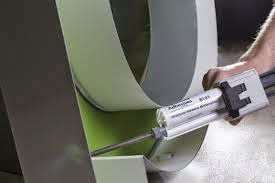
Hi File Download:Hi (Industrial adhesives product selector guide.)

Hi File Download:Hi (Industrial adhesives product selector guide.)

 Click Here To Download Guide!.

Click The Following Link Here Or Image Above To Download Guide Or View & Save Below;


Hi THANK YOU!.

For Further information visit & click the following web link here or image below;

 Click Here To Visit Website!.


8 May 2014

Hi ENGINEERING EFFICIENCY/EFFECTIVENESS - KEY METRICS!.

Hi ENGINEERING EFFICIENCY/EFFECTIVENESS - KEY METRICS!.


Companies or organizations often misuse Engineering resources at the expense of accomplishing the goals for these technical resources.  

Measurement is key to identification of the activities and limit of the “leaks” affecting the department.  

It has been said “you can only manage what you can measure” and measurement is key to an efficient/effective engineering department or organization.


As a guiding principle, application of metrics should embody these characteristics:

  • simple to record and track; minimize the total number of measures.
  • meaningful in relation to the work at hand and practical.
  • related to or in support of the business goals.
  • kept active and accurate (revise as required).
  • available at all times to key personnel responsible (post or distribute).
  • reviewed periodically with all of the personnel (obtain feedback).
  • management interest, involvement and support in achieving results.

The metrics applied should be tailored to the activity or department and documented using a meaningful frequency.  

Many of the metrics may stand alone or be plotted against hours, orders or project elements.  

For an on-going effort such as backlog or changes per a base number of features, a rolling average may be desirable in addition to a single time related value.

In other words, focus on the issues important to the business and activities key to success.  

Initiate one or two metrics per area of interest or product type.  

Begin with a few immediately and grow into the desired full set.

The following list is broader than needed but it provides an indication of the types of metrics that can be applied.  

This list assumes a business that supplies a product or service per customer request or potential multiple selection of model sizes or custom features.


STAFFING:


  • Hours spent (or % of total) for submittals, sales orders, product development, manufacturing support, change, or “other” support. 

ORDERS:

  • Total number of active orders per product group over time.
  • Number of submittals in process vs active orders (backlog).
  • Schedule performance, actual vs estimated, or % on time.

SUBMITTALS:


  • Estimated hours per order vs actual hours per order.
  • Number of sales orders in process and hours required.
  • On time (schedule) release to next group (release to design).
  • Average drafting hours per order or per estimate of project.
  • Available man-hours per product vs backlog hours per product.
  • Number of changes: pre and post release per order or project.

DESIGN/DRAFTING:


  •  Estimated hours per order vs actual hours per order or project.
  • Number of sales orders in process and hours required.
  • On-time (schedule) release to production (days missed included).
  • Average drafting hours per order or per project element.
  • Available man-hours per product vs backlog hours per product.
  • % errors vs total number of drawings per order, time period, project.
  • Number of changes pre and post release (per order, project, etc.).

DESIGN/ENGINEERING:


  • Proposals won vs total submitted.
  • Estimated hours per order, project vs actual expended.
  • Number of sales orders in process and hours required.
  • Available man-hours per product vs backlog hours per product.
  • Number of changes, pre and post release.
  • % of corporate revenue from products developed in last 4 years.

ENGINEERING/PRODUCT QUALITY:


  • Warranty expense as a % of shipped $.
  • Field or customer complaints vs total items shipped.
  • Retrofit or rework $ as % of shipped $.
  • Engineering hrs addressing complaints vs total available.
  • Product or component MTBF (mean time between failures).

12 Feb 2014

Hi Technology Insight; We Talk To Business.

Hi Technology Insight; We Talk To Business.


Liquid cooling start up Iceotope talks about the basics of its business;


Fluids don't always mean death for electronics, as founder Peter Hopton explains.

Iceotope has developed an efficient liquid cooling technology that allows supercomputers and data centers in the UK, and even in hot equatorial regions, to run as efficiently as those based the Arctic Circle. Iceotope's system was modeled using computational fluid dynamics, and eliminates the need for air conditioning units and fans to carry heat away. Wired.co.uk spoke to founder Peter Hopton.
HQ: Sheffield, UK

Founder: Peter Hopton
Launched: 2012
Funding: £2 million ($3.2 million) from Investment Partners of Guernsey. £6.4 million ($10.5 million) Series A funding round with Aster, OMBU and the regional growth fund.


What is your proposition to potential customers?
The company was set up with the objective of making fans and air conditioning units obsolete. Spinning fans that push air over electronics is an incredibly inefficient way of removing heat and liquid cooling has long been seen as a winning alternative. The problem has always been developing a liquid cooling system that actually works and will have big server farm operators willing to use it. I believe we've cracked this nut with Iceotope.
What problem do you solve?
IT generates heat and if this heat is not taken away, electronics will begin to bend, break, and fail. Iceotope's technology removes this heat and it does so much more effectively than traditional cooling methods. It also allows this heat to be recycled in the form of hot water, which can be fed into domestic radiators to reduce heating bills.
On a larger scale, Iceotope helps to solve the biggest problems associated with the rapid growth of the Internet. The global digital footprint is estimated to account for ten percent of energy use worldwide and data centers represent a big part of this. Our technology can halve the energy use of these facilities and therefore has the potential to have a big impact on global energy use as a whole.

How do you plan to make money?
Through shipping equipment, but ultimately we intend to create a product ecosystem around our liquid cooling technology by opening the technology up to other vendors.

Where did you get the idea for the business?
In 2005 I was studying the history of liquid cooling used in old equipment in the 70's and 80's such as the Cray 2 supercomputer. I was interested in making a modern version that met the needs of a modern server user. Immersion cooling has had its issues in the past, whether using lots of energy to pump primary coolant or by degradation during the boiling of coolant in a phase change system. During our experimentation we discovered the convective cell used in Iceotope's technology and filed patents—this eliminates the need for pumping primary coolant and solves problems previously associated with phase change.
What's the biggest misconception about your business?
Most of the liquids people encounter on a daily basis don't mix well with electronics. Everyone's spilled coffee on their laptop or dropped their smartphone down the toilet, probably to disastrous effect.
People can get nervous at the thought of mixing electronics and liquids but fortunately the substance we use doesn't conduct electricity so it's completely safe to do so. I've dunked my phone in the stuff countless times and it still works perfectly.
Can you express in some tangible terms how the business has developed?
18 months ago, all we had was the proprietary technology. Now Iceotope has a commercial product and multiple customers using it daily. We've also had a significant financial boost following the closure of our £6.4m funding round.

What has been the most challenging time for the company?
In late 2011/early 2012, when the company was in flux and we were faced with the mammoth task of making Iceotope's technology into a product. There were lots of new faces in the team (particularly at the management level) and long hours to work, so it's hardly surprising that this was a difficult period.
How did you overcome that?
Hard work and not much sleep. As soon as the new team started to bond, that really helped matters too.
What is the best piece of advice anyone has ever given you?
"Ain't no presentation, without caffeination". I think this stuck with me because it was so well delivered at the time. It's especially true if you've just got off the plane in another time zone and are expected to take a meeting within the hour.
Click link here or image above to view original article source
by Olivia Solon, wired.co.uk Feb 9 2014, 2:07am AUSEDT
23 Feb 2013

Hi Popular Construction Blogs Listing.

Voted Hi' Most Popular Construction Blogs Online:


Hi Pollution Engineering Buyers Guide.

Hi Pollution Engineering Buyers Guide.
"Directory for Air, Water, Waste & Remediation Markets."

Hi Free Engineering Magazines and Downloads

Hi Free Industrial & Manufacturing Magazines and Downloads.

Hi Graduate Opinion Poll.

Hi Graduate Opinion Poll.
Hi - "Engineering Field."

Hi Translate

Hi 3D SketchUp "The Easiest Way To Draw 3D"

Hi 3D SketchUp "The Easiest Way To Draw 3D"
Hi Drawing “ Dust collectors” & “Systems”.
