Showing posts with label certification. Show all posts

18 May 2014

A Hi Green Building Market Overview "Hi Must & Hi Recommended Read!."

A Hi Green Building Market Overview "Hi Must & Hi Recommended Read!."


Green building is going to be a massive, but it’s not as easy to understand as other markets.

MICHAEL KANELLOS: JUNE 8, 2009

Most Read Article Of Its Kind To Date!

Hi Clients Are Increasingly Demanding the right to Certified Sustainable Products For Green Building Projects & Markets. Basic Requirements include High Performance at a low running cost and reduced energy consumption with minimal Environmental Impact effecting our living standards.

The Green Market future Vs demand as overviewed in the following article:

If you want to get a sense of the scale of the opportunity in green building, look around.
If you're reading this while inside a U.S. office building, there is an 85 percent chance you're under or near a fluorescent tube bulb. General Electric and Westinghouse began selling them in 1938. They were a big hit, along with the television and an IBM typewriter, at the World's Fair a year later.
Modern drywall? 1916. Joseph Aspdin invented Portland cement, which is still the world standard today, in 1824. The cement is made by crushing rock and cooking it to 2,700 degrees Fahrenheit. With the right tools, the Flintstones could have figured that one out. Electric air conditioning? Willis Carrier invented it in 1902. And you can thank Albert Butz for the devising the thermostat in 1885.
And if you think about it, you could probably take care of your cooling and lighting needs if you could only open your office window.
It's that handsome combination of IOU (inefficient, old and ubiquitous) technology, the potential for inexpensive solutions and the "wow" factor that green design techniques lend buildings like the California Academy of Sciences that lay at the heart of the market. Building hasn't been as popular with VCs as solar or biofuels -- but many believe we are on the verge of a two-decade boom in retrofits and new types of construction. (It's why we are holding our Green Building Summit next week on June 11.)
Besides, if the economics won't drive it, legislation will. In California, new homes will likely have to meet net-zero energy standards by 2020 and commercial buildings will have to hit it by 2030. An estimated $21.65 billion is baked into the American Recovery and Reinvestment Act. And to get grants in other parts of the program, applicants have to show they are "shovel ready."
But it's also a more complex market with more moving parts than solar or biofuels. We've broken it down into five segments.
1. Construction and Design;
If you talk to contractors and architects, they claim that most energy savings can be accomplished through proper design and construction. While that point can be debated, green construction has clearly become commercially attractive. Various studies report that LEED-certified or LEED-like buildings generate higher rentals and property values. Employers claim environmental construction reduces sick days and serves as a recruiting tool. A much-touted retrofit of the Empire State Building dropped energy consumption by 38 percent.
In China, A skyscraper being erected in Shanghai will have municipal parks on most floors while buildings by upscale developer Shui On Land can rent for 1.5 times that of competing properties, according to sources.  Retrofitting or building green also does not necessarily add costs.
Source: Department of Energy
Limbach Energy Solutions, a large HVAC contractor in Pittsburgh, has begun to take a program developed in Ohio for cash-flow neutral energy retrofits. In the commercial market, large builders like Webcor and Weitz already gain a substantial portion of their revenue from LEED. A few startups like Project Frog, which builds energy efficient schools, have also emerged.
The consumer space has moved slower than commercial or government. Prior to the economic downturn, mass home builders such as Lennar reported fairly strong sales of homes equipped with solar panels. Since then, it's been tough to sell homes. Michelle Kaufmann Designs, one of the early modular home builders, recently went under while others such as Living Homes and Zeta Communities are in startup mode.

6 Nov 2013

Hi Green Regional Impact & Market Projects Overview.

Hi' IMPACT of 

UAE “LEEDS” in sustainable growth!.


In the UAE alone, more than 65 projects have been LEED certified with more than 10 times that amount registered for certification according to the Middle East Center for Sustainable Development. In addition, Abu Dhabi’s Estidama Pearl Rating has been awarded by the Urban Planning Council to more than 40 projects in Abu Dhabi. Citing these as instances of UAE taking the lead in sustainable growth, SAS International, a manufacturer of interior fit-out products and green building solutions, has highlighted in a press release that in anticipation of the upcoming ecoConstruct Expo 2013 to be held in Dubai, developers in the region will once again focus on the benefits of implementing green building practices and integrating innovative, sustainable building solutions. The company reaffirmed that sustainable development and green building made up key pillars in Dubai’s Vision 2021 and Abu Dhabi’s Vision 2030.


Hi 'UAE Regional Projects & Analysis Impact of LEED - Carbon Footprint:


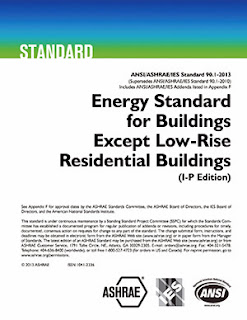
 Click Here To Visit ASHRAE Homepage To Purchase Publication


 Click To Open ASHRAE 90.1 From Wikipedia, the free encyclopedia

ASHRAE 90.1 From Wikipedia, the free encyclopedia

Download Free Software Tools Useful Software Resources made Available by visiting the ASHRAE Homepage click here or below links for free software
 Click To Visit ASHRAE Free Software Tool Downloads
Click To Visit ASHRAE Free Software Tool Downloads

Example of software You Can Now Download & View; ASHRAE: Service Life and Maintenance Cost Database;

- Click the link here to download 2001 ASHRAE Fundamentals Handbook free e text made available & is over 38 MB download & view. Or else for latest versions visit the ASHRAE website to purchase copies of the following links for Handbooks;

2012 ASHRAE Handbook—HVAC Systems and Equipment
2011 ASHRAE Handbook—HVAC Applications
2010 ASHRAE Handbook—Refrigeration

Presentation On Measuring & Verification of Green Energy Building Performance:


Click & View or Download .PDF File Market & Industry Reports 2011 - 2014 made Available to obtain a regional overview, This material includes;


 -  Saudi Construction Industry January 2011 study by Ventures Middle East & Saudi Big 5 Show based on regional informative overview of KSA. Click link here to download & view report. 

- Click To View & Download The Meed Big 5 Show Kuwait 2013 Report considered to be an informative resource for this region focus. A Meed Report from The Big 5 Show covering similarly the UAE is available in a post article previously published click link here to visit this MEED UAE 2013 Report also available on the Hi Clients Blog.

- Visit the Homepage of an online e text publication website that we recommend, e text is available in .pdf format view & download access, Visit the e book navigation menu on the sites highlights & focus as is it titled COMMERCIAL BUILDINGS ENERGY MODELING GUIDELINES & PROCEDURES (MGP). 

-  Heating, Ventilation and Air Conditioning (HVAC) Market in the GCC Report study done by ventures middle east on July 2012. Click Here


 Email Inquiry
Email Industry Professionals On Expert Advice simply By Clicking Above

- 

27 Oct 2013

Hi Field Testing Brief!.

Hi Field Testing Brief!.

The purpose of a field test is to define, via testing and measurement, the actual aerodynamic performance of a fan when installed in a system. Since installations often include elbows, obstructions, swirl and sudden changes in area, obtaining accurate measurements may be difficult. Additionally, these items may have an impact upon the unit’s performance. This impact is called a system effect.


AMCA Field Test Publications AMCA Publication 203 is a general purpose guide for the measurement of fan performance. This guide is applicable to most air handling equipment installed in any system. It includes the calculation process for loss in performance due to system effects and methods for calculating test results and uncertainties. A wealth of reference material and examples of typical applications pointing out where difficulties may be encountered are included. People involved in field testing should also be familiar with AMCA’s Certified Ratings Program outlined in Publication 211 and the concept of system effect factors (SEF) defined in AMCA Publication 201, Fans and Systems.

You may be interested in viewing an article recently published on Hi Shelf discussing the Topic of Fan Performance with reference to this article & AMCA Standards & Codes which may expand on the knowledge here. Visit Hi Shelf direct publication link post by clicking here. 

Reasons for Field Tests Three main reasons for conducting a field test are:


1. General System Evaluation - A measurement of the fan and system’s performance. This test may be used as a basis for future modifications or adjustment to the system.
2. Acceptance Test - A test specified in a sales agreement to verify that the fan is achieving the specified performance.
3. Proof of Performance Test - A test in response to a complaint to demonstrate that the fan is meeting the specified performance requirement.

Performance Rating Parameters As already stated, the specific objective of a field test is to determine the aerodynamic performance of a fan when installed in a system. The operating point will occur at the intersection of the system resistance curve and the fan curve.

Operation at any other point is impossible without altering either the fan or the system. An operating point must be fully defined by obtaining test data that allows you to determine each of the following parameters:

1. Flow Rate - The fan flow rate is the volumetric flow rate corrected to the gas density at the fan inlet. The volumetric flow rate at any location in a system can be obtained by measuring the velocity pressure according to a specified grid in the plane of interest. The number and distribution of points is
stipulated in AMCA 203. The flow in that plane is calculated by converting the average velocity pressure to its equivalent velocity and multiplying by the area of the traverse plane. The flow rate obtained in the measurement plane must be referred back to the fan inlet using the ratio of densities at the measurement plane to that of the fan inlet.

2. Fan Static Pressure - The fan static pressure is the algebraic difference between the static pressure at the fan outlet and the total pressure at the fan inlet. Static pressures using a pitot tube or static pressure taps are obtained near the fan outlet and fan inlet. The total pressure at the fan inlet is a measured value that consists of the sum of the inlet velocity and static pressures.

3. Fan Speed - This is the rotating speed of the fan shaft in revolutions per minute. Typically, measurements of fan speed are obtained at the beginning and end of a test and then averaged providing there is a small difference.

4. Fan Brake Horsepower - This is the power delivered to the fan shaft and does not include any drive losses other than the fan bearings. Nearly all field installations are driven by an electric motor in conjunction with a v-belt drive or variable frequency controller. Portable analyzers are available that read volts, amps, watts and power factor into the motor. Power out of the motor must be calculated using motor efficiency values or the ratio of actual amps and volts to nameplate values when the motor is at least loaded to 90% of full load. Fan brake horsepower values for units with v-belt drives must be calculated using the v-belt drive loss graph in Appendix L of AMCA 203. Units driven by a variable frequency controller must be by-passed to obtain accurate electrical values due to sine wave distortion. These values must then be corrected by the fan laws to the actual operating speed.

5. Fan Gas Density - The fan gas density is the density of the gas being handled at the fan inlet. The inlet density is calculated using the barometric pressure, wet and dry bulb temperature and corrections for suction or pressurized inlet conditions.

Calculation and Analysis of the Results Detailed calculations are contained in AMCA 203 for obtaining test results. To compare test results with the factory-specified fan curve it is necessary to include SEF values, relevant drive losses, and speed and density corrections. The converted operating points can then be plotted on the factory- AMCA certified performance rating curve for analysis An estimate of the individual uncertainties for each test parameter must be made. These can be combined to provide an
overall uncertainty in flow, pressure and power. An error rectangle is then established around the test point using plus and minus absolute values of the combined uncertainties. Assuming the procedures from AMCA 203 are followed, combined uncertainties range as follows:

Volume 2% to 10%
Pressure 2% to 8%
Horsepower 4% to 8%

Hi Summary';


Keep in mind that the factory tests are conducted in ideal conditions. Because fans are rarely installed in ideal conditions, field tests are frequently performed. 


18 Feb 2013

Hi MEED’s Saudi Arabian Energy EPC Projects Conference!.

Hi MEED’s Saudi Arabian Energy EPC Projects Conference!.


EED’s Saudi Arabian Energy EPC Projects Conference is an event designed to provide a platform for the EPC community who service the projects market of Saudi Arabia. The event will focus on the major new project opportunities for the EPC market in the oil, gas, petrochemicals, industrial, electricity, water and desalination sectors of the Kingdom. In addition to focussing on major project announcements, updates and opportunities, the event will address the issues that underpin EPC project delivery in Saudi Arabia. 

Now in its 3rd year, Saudi Arabian Energy EPC Projects builds on the success of the previous two conferences which were attended by more than 150 attendees from across the EPC value chain – of which an impressive 95% said they would attend again.


Features & Benefits Include:

  • Tasnee presents an overview of the Kingdom's latest strategies for driving petrochemicals industry growth
  • ExxonMobil and Nexant discuss private sector investment opportunities for oil companies and EPC contractors into Saudi Arabia's petrochemicals sector
  • SIPCHEM, Banque Saudi Fransi and Al Rajhi Bank analyse financing strategies for downstream industry initiatives
  • Identifying the opportunities and challenges ahead for the Kingdom's energy EPC projects market
  • Understanding the financial implications and licensing risks to your business if non-compliant with newly announced localisation initiatives. Perspectives from Mustang HDP and Zamil Group
  • IRENA, ESIA, SASIA discuss Saudi Arabia's US$109bn alternative and renewable energy projects market
  • Attendees will receive a signed certification of attendance
Over the past five years the Saudi EPC market has grown from strength to strength. Since 2008, more than $136bn worth of contracts have been awarded in the oil, gas, petrochemicals, pwer and water sectors in the kingdom hitting a high of $32bn in 2012. For contractors and clients alike the challenge is now on ensuring delivery of these projects on time and to budget.
By all accounts the scale of the challenge is only going to get bigger. There are more than $160bn worth of projects planned and un-awarded in the kingdom in the four sectors, ensuring that Saudi Arabia will remain the region's largest EPC projects market and single greatest opportunity for your business.

Previous attendees include:

Saudi Aramco, SIPCHEM, National Water Company, TASNEE, ACWA Power, Royal Commission for Jubail & Yanbu, South Rub Al-Khali Company (SRAK), KBR, Jacobs Engineering, Essar Projects, Technip, National Power Company, Mustang – HDP, Jadwa Investment, BNP Paribas GCC, Linde Arabian Consulting, McConnell Dowell Saudi Arabia, SPIE Oil & Gas Services, Tawuniya, Eagleburgmann Middle East, Consolidated Power Projects, Middle East Specialized Cables, Maritime Industrial Services Arabia, International Building Systems Factory, Conoco, AFI, Gama Power Systems, AYTB, Saudi ACC, Hertel, Babcock Borsig Service Arabia, Samsung Saudi Arabia, Arabian Petroleum Supply Co. (APSCO), Zamil Air Conditioners - Zamil Industrial, Hanwha Saudi Consulting, PMI-AGC in Eastern Region KSA, Herbert Smith, Emirates Solar Association and many more… 

CERTIFICATE OF ATTENDANCE:

At the end of the Saudi Arabian Energy EPC conference, we will be presenting attendees with certificates of attendance!


The event’s conference, workshop and exhibition is permitted by the Royal Instruction of High Commission for conferences and exhibitions approved by Ministry of Commerce and Industry. Organised by MEED gC. This event has been registered with the Ministry of Commerce and Industry of Saudi Arabia.


Hi Pollution Engineering Buyers Guide.

Hi Pollution Engineering Buyers Guide.
"Directory for Air, Water, Waste & Remediation Markets."

Hi Free Engineering Magazines and Downloads

Hi Free Industrial & Manufacturing Magazines and Downloads.

Hi Graduate Opinion Poll.

Hi Graduate Opinion Poll.
Hi - "Engineering Field."

Hi Translate

Hi 3D SketchUp "The Easiest Way To Draw 3D"

Hi 3D SketchUp "The Easiest Way To Draw 3D"
Hi Drawing “ Dust collectors” & “Systems”.